


A new Japanese commentary argues that redevelopment, rail changes, and tourism have pushed Shibuya toward a more generic identity.
Glass-heavy commercial projects like Shibuya Scramble Square, Shibuya Stream, and Shibuya Sakura Stage are singled out as symbols of the shift.
The piece also points to the loss of old Shibuya’s messy, nightlife-heavy energy, along with Halloween chaos and crowding around the scramble crossing.
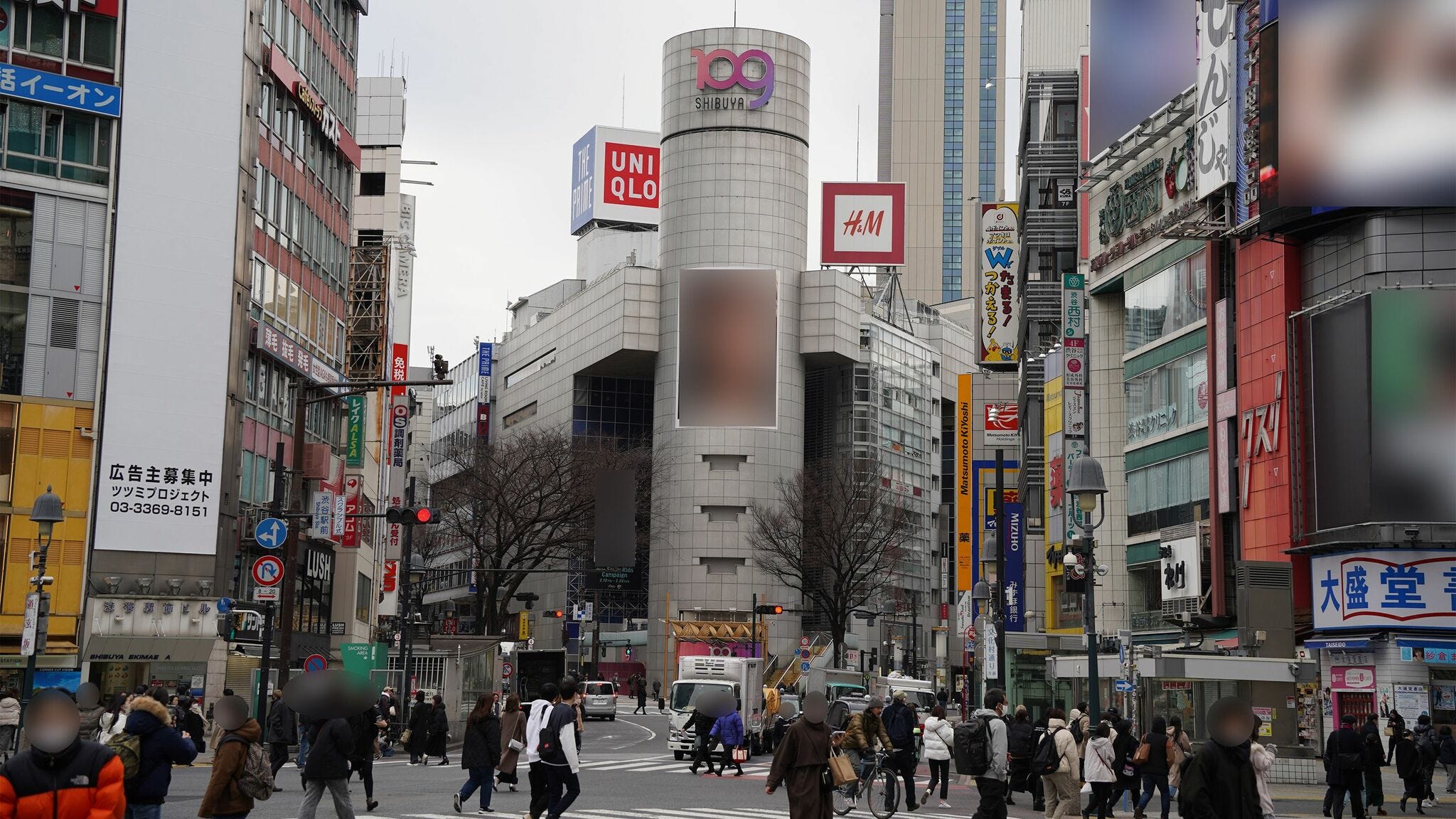
Shibuya is still one of Tokyo’s most recognizable neighborhoods, but a recent article in PRESIDENT Online argues that it no longer feels like the same place. Writer Masayoshi Osaka, manager of the urban exploration site Tokyo Deep Annai, says the district once known as a youth culture center is gradually losing the identity that made it special, worn down by large-scale redevelopment and a surge in foreign tourism. In his view, Shibuya has become less raw, less strange, and less unmistakably itself.
His complaint is not that Shibuya has become less active. It is that it has become less distinct. Osaka writes that many rebuilt parts of Tokyo now feel like “Kintaro-ame,” a Japanese candy known for producing the same face no matter where you cut it. In other words, every new development looks and feels the same.
Glass Towers Have Replaced Much of the Old Texture
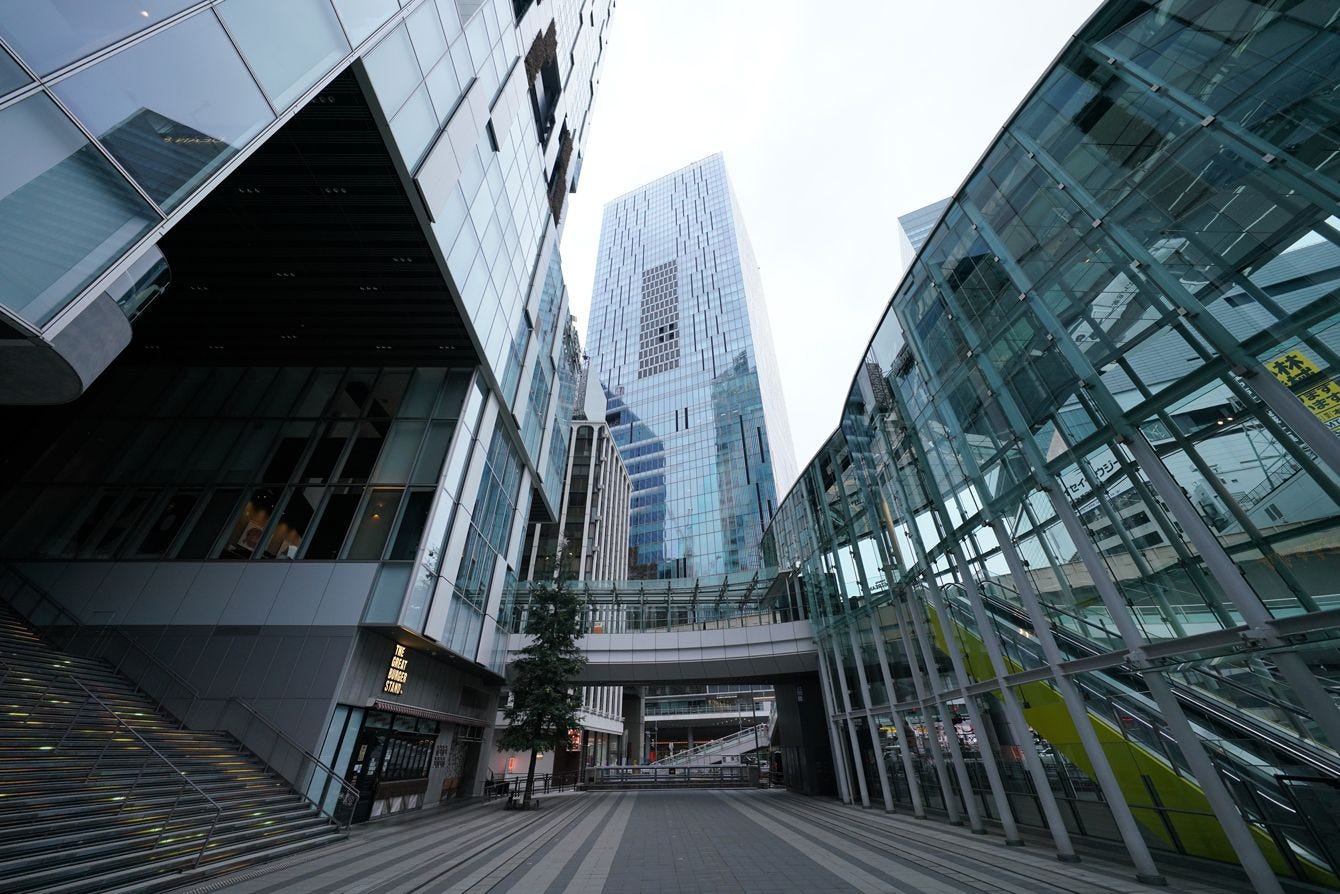
Osaka points to the major redevelopment projects clustered around Shibuya Station, including Shibuya Scramble Square, which opened in 2019, Shibuya Stream in 2018, and Shibuya Sakura Stage in 2023. He argues that these projects have surrounded the station area with shiny high-rises that create a “strange sense of uniformity,” replacing the neighborhood’s older patchwork identity with something smoother and more corporate.
He is especially blunt about the kind of businesses these projects attract. Because developers prioritize profitability, he argues, only large, well-capitalized tenants can move in, and that usually means chain stores. The result is a cityscape that may look new but feels interchangeable.
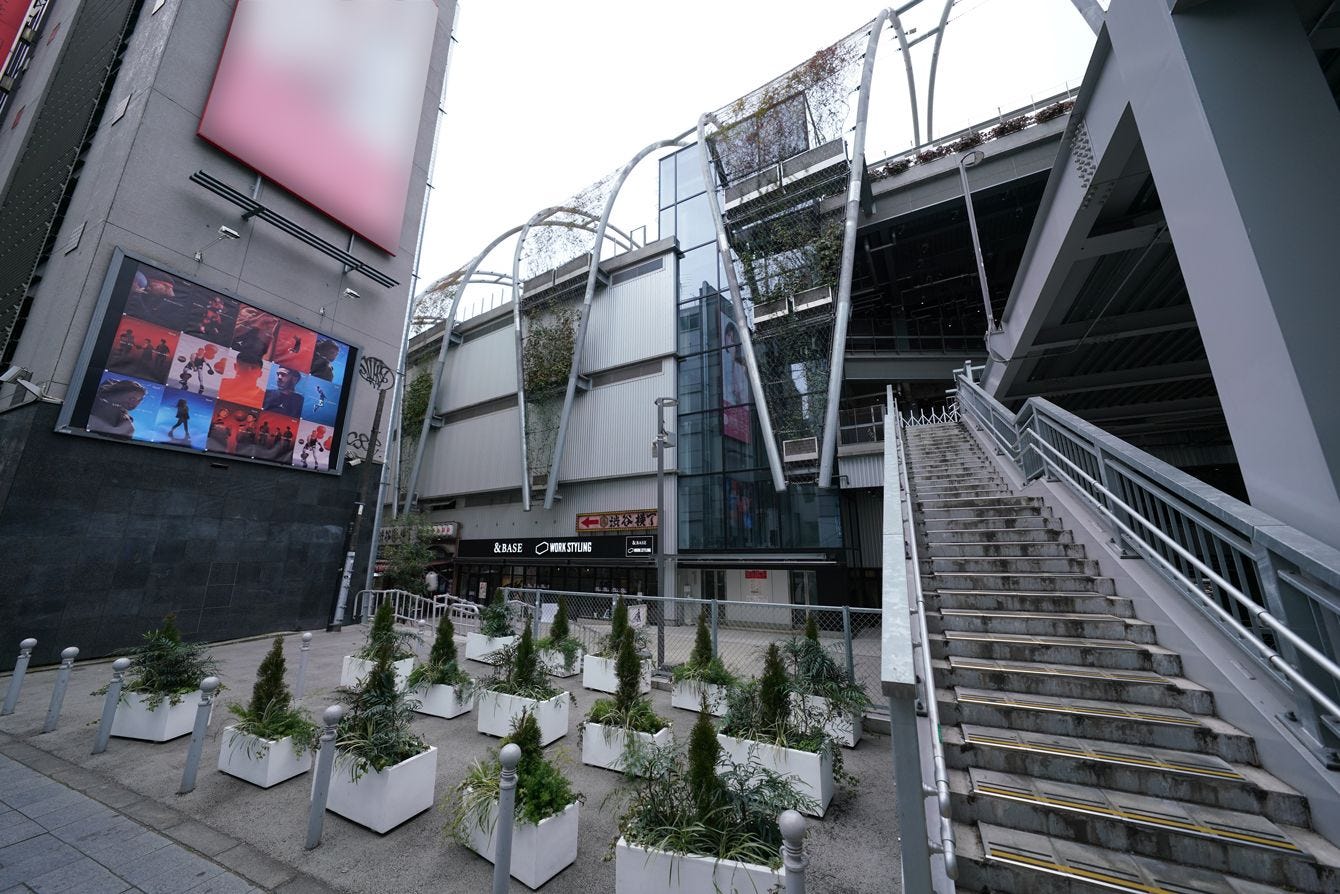
Miyashita Park stands out as one of his clearest examples. Once known as a straightforward public park in central Shibuya, it was rebuilt as a commercial complex with a rooftop green space. Osaka’s verdict is harsh: “It feels like a park, but not a park.” He argues that by wrapping the lower levels in retail and limiting the ways people can calmly relax there, the redevelopment stripped away the simplicity that made it work as a public space in the first place.
A Rail Change Helped Turn Shibuya Into a Place People Pass Through
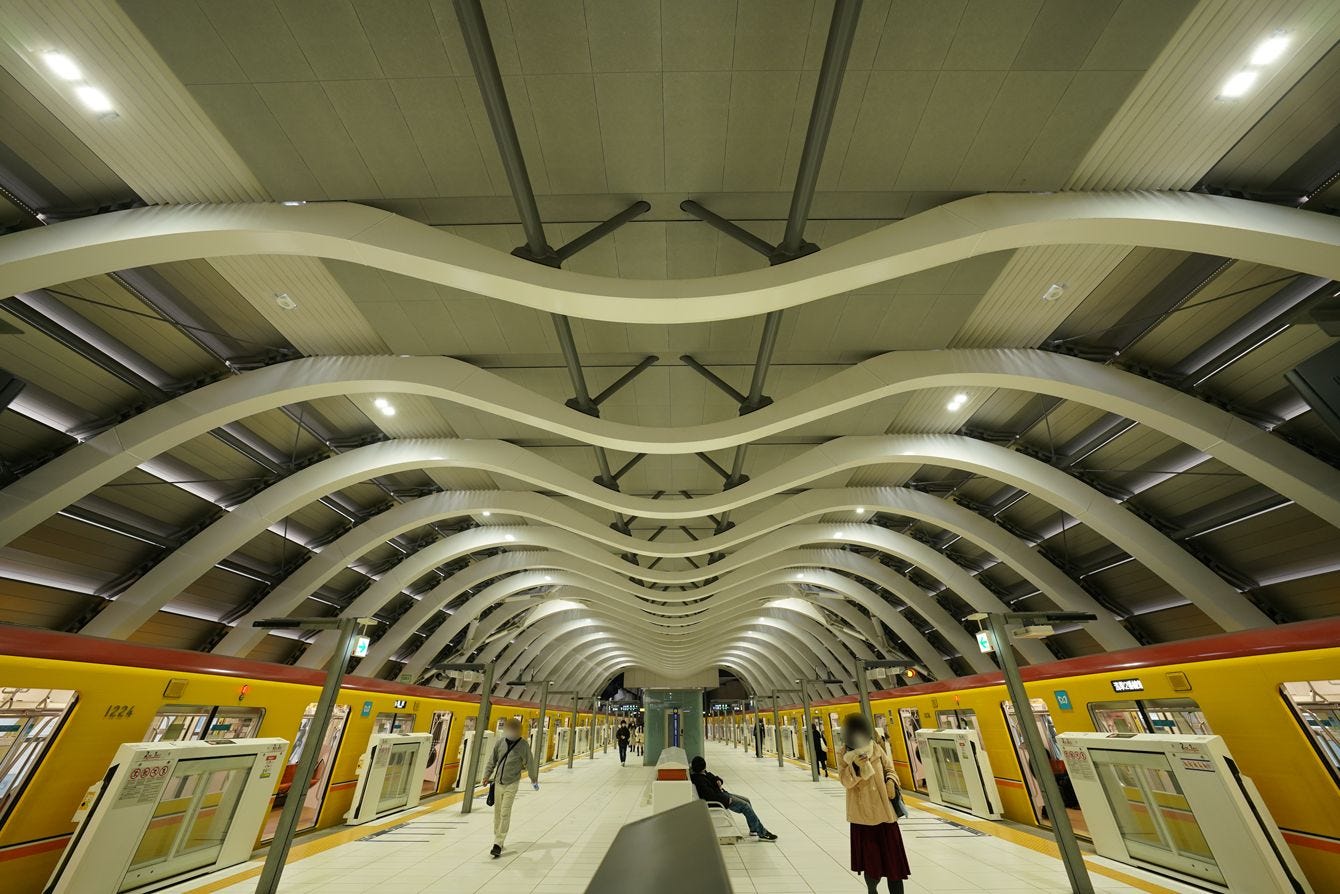
One of Osaka’s most persuasive points has less to do with architecture than transit. On March 16, 2013, Tokyu’s Toyoko Line moved from its old above-ground Shibuya Station into a new underground platform and began through-service with the Tokyo Metro Fukutoshin Line. That meant passengers no longer had to get off in Shibuya. They could continue directly on to other major hubs.
Osaka sees that as a turning point. In the old setup, Toyoko Line riders spilled directly into Shibuya’s shopping streets and entertainment zones. After the switch, it became much easier to keep riding to places like Shinjuku and Ikebukuro. He sums it up bluntly: “Shibuya changed into a town people simply pass through.”
That shift may sound technical, but in Tokyo, station layout shapes neighborhood life in a very real way. Shibuya lost some of its built-in gravitational pull the moment fewer people were forced to emerge there.
Tourist Crowds Changed the Mood Around the Crossing
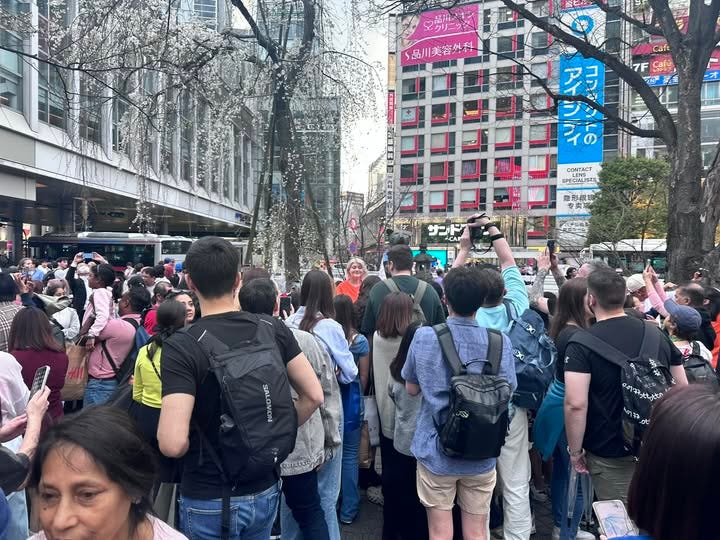
Another major factor is inbound tourism. Osaka notes that foreign visitor numbers to Japan rose from about 10.36 million in 2013 to about 42.68 million in 2025, roughly quadrupling over twelve years. In Shibuya, the most obvious symbol of that shift is the scramble crossing, which has become one of Tokyo’s best-known sightseeing spots.
The crossing looks impossible and orderly at the same time, with huge crowds moving in every direction without crashing into one another. But he argues that the concentration of visitors around Hachiko Square and the station front has changed the atmosphere of the district. Shibuya is now crowded in a different way: not always because people are deeply engaging with the neighborhood, but because it has become a global photo stop.
That crowding has also brought tension. Osaka mentions unpleasant pedestrian incidents such as a foreign tourist’s child being tackled and knocked flying by a so-called “bumping woman” while crossing the scramble intersection. Some people now feel there is less reason to go out of their way to visit Shibuya, especially when other parts of Tokyo offer denser shopping and entertainment options.
The Older Shibuya Was Dirtier, Stranger, and More Human
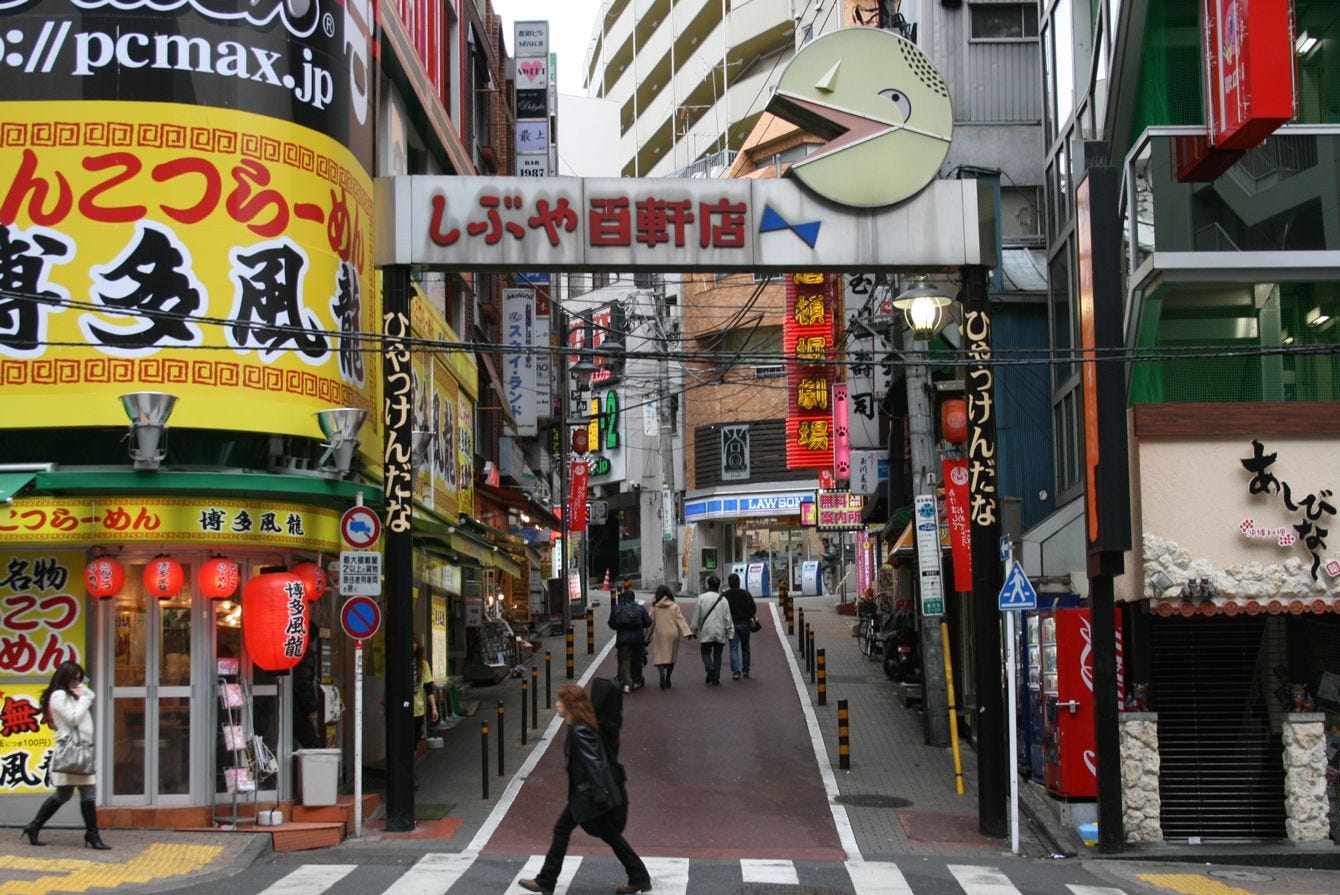
What gives Osaka’s piece some force is that he is not praising a refined lost paradise. The Shibuya he remembers was messier, seedier, and often uncomfortable. Away from the main roads, he remembers Shibuya in 2007 as a place packed with love hotels, strip theaters, adult businesses, and narrow sloped backstreets in areas like Dogenzaka, Hyakkendana, and Maruyamacho. He calls it a “waisatsu” space, meaning vulgar, disorderly, and slightly dirty.
One of the most evocative parts of the piece comes when he describes old Shibuya as a place that stirred the imagination. Couples disappearing into narrow alleyways, human drama unfolding on slopes and side streets, a feeling that the city still had corners you were not meant to fully understand. It was, as he puts it, a place with a real “human smell.”
From Delinquent Car Culture to Halloween Chaos
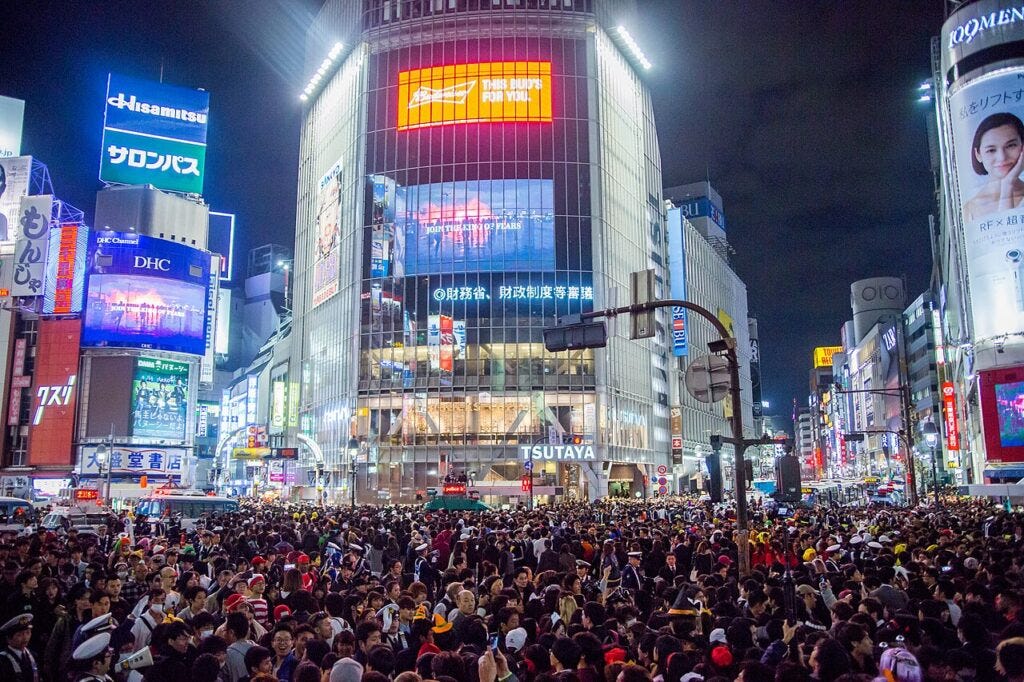
Osaka also reminds readers that older Shibuya was shaped by a different kind of crowd long before the tourism boom. Around Dogenzaka, he says, you were more likely to see rough-looking youth from places like Atsugi or Saitama, arriving in flashy cars or drifting in by train, than foreign visitors.
That loose, unruly energy later fed into Shibuya’s Halloween reputation. By the mid-2010s, the area had become nationally famous for wild costume crowds and disruptive street partying, especially in Center-gai. Osaka notes that this behavior was effectively curbed after 2023, and that attitudes hardened further after both the pandemic and the 2022 Itaewon crowd crush in Seoul.
Seen from a distance, those Halloween crowds could almost make Shibuya still look like a “youth town.” But once disorder loses its boundaries, it starts feeling dangerous. In his view, that kind of atmosphere may also have helped push more ordinary visitors away.
For Osaka, the deeper problem is not just redevelopment or tourism, but the slow erosion of identity. Shibuya was once valued as a place where you could encounter a side of Tokyo that felt vivid, unpredictable, and unmistakably local. Now, he wonders where the district’s old pull has gone.
Yeah this article more articulately put forward what I've been saying in convos for the last 5 or 6 years.
Shibuya basically is dead and reclaimed into the concrete jungle of modern Tokyo.
I feel like the 2020 Olympics and the new buildings and developments that were planned to coincide with it were the final nails. Ban on drinking was just a symptom of contradictions already too prevalent to ignore.
Neighborhood probably peaked in the early 00s.
I felt like Harajuku died a similar death in the 10s.
(When I said "died" and "death", I don’t mean economic decline, but rather a death of the identity, subculture, and the spirit of the neighborhood that we knew is dead, and is replaced with something new that's not dead.)
Shinjuku's gentrification feels like it's not the same as those last two examples, though that's changing that part of the city for sure.
Akihabara is a place I no longer visit when Im in Tokyo, as it also feels more like a place aimed at aimless tourists rather than a local subculture. Akiba definitely went through phases (electronics -> games and game centers-> DVDs and anime -> maid cafe and idol culture), but I felt like corona and it’s most recent reincarnation catering to tourists has made it into a more plastic (not vinyl) amalgamation of its previous incarnations.
The new version of these neighborhoods just aren't places I want to be or even visit. I'm sure, like water, the new youth cultures will forge a path into some new neighborhoods, and are probably already there and Im too old now to have noticed.
Interesting to see Tokyo is going through the same gentrification that's commonly associated with American third places. Almost no place is safe from the effects of corporate influence.