


Vintage kaiju toys in Japan are selling for huge sums, with one figure reaching about $188,000.
Collector Nabe Yakan says the market changed after COVID, as social media helped turn old monster toys into art-like collectibles.
Rising prices have also brought convincing fakes, including repainted, artificially aged, and counterfeit figures entering auctions and shops.
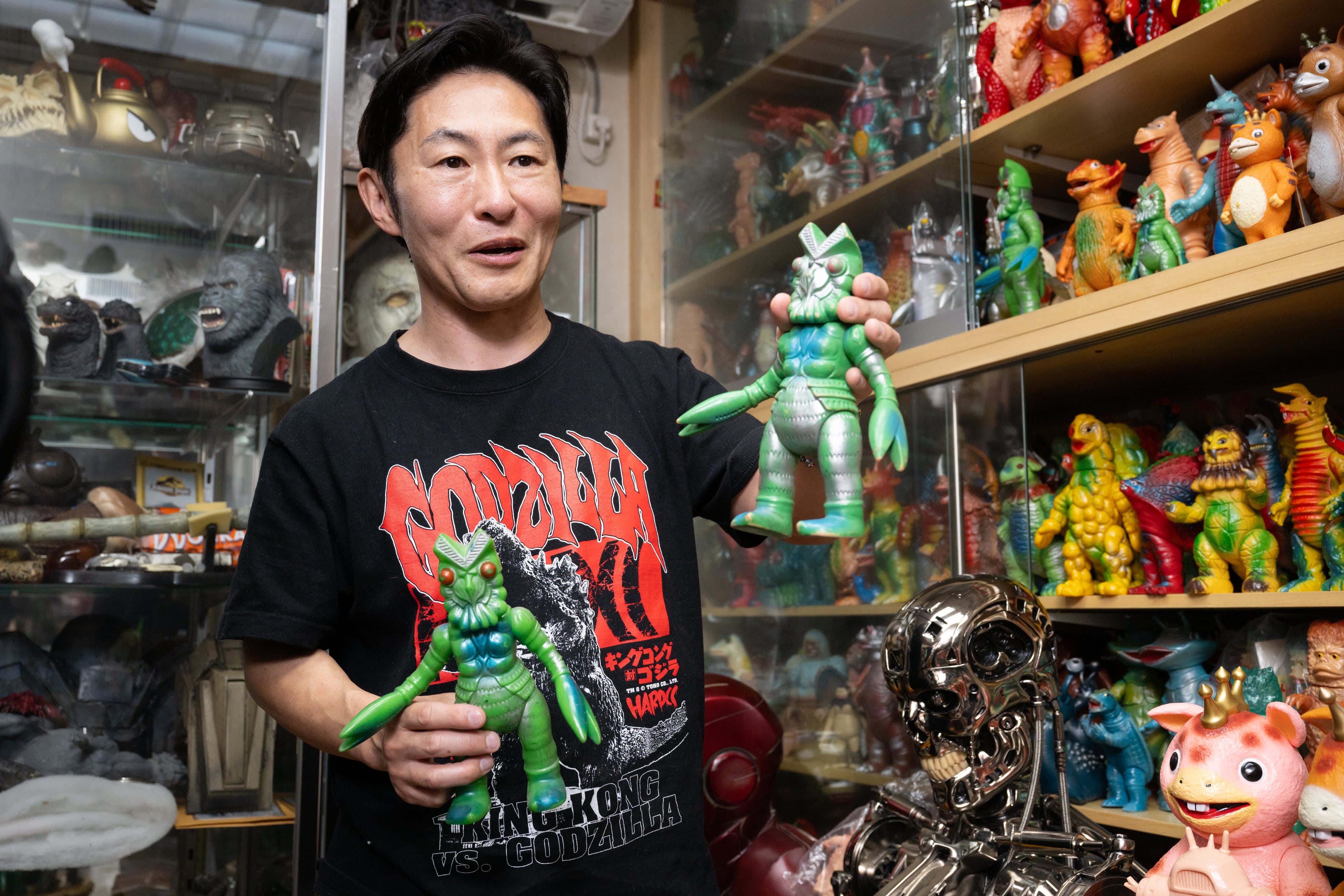
Vintage kaiju toys are reaching astonishing new prices in Japan, and one veteran collector is warning that the booming market has also created a darker world of counterfeits and speculation. The toys in question are soft vinyl figures, especially the colorful monster toys tied to tokusatsu shows and films from the 1960s and 1970s.
At a Mandarake collector’s auction held in March, several Showa-era monster figures sold for prices that stunned collectors. Takkong sold for ¥4.1 million, or about $25,800. Sabotendar reached ¥9 million, or about $56,600. Peguila sold for ¥13.6 million, or about $85,600. The biggest surprise was Garamon, which sold for ¥29.9 million, or about $188,000. Many of these toys originally sold for only a few hundred yen in the 1960s and 1970s. The Garamon figure was from Marusan’s early “first-period” production run, already a famous collector’s item, but the near-¥30 million price pushed it into another world entirely.
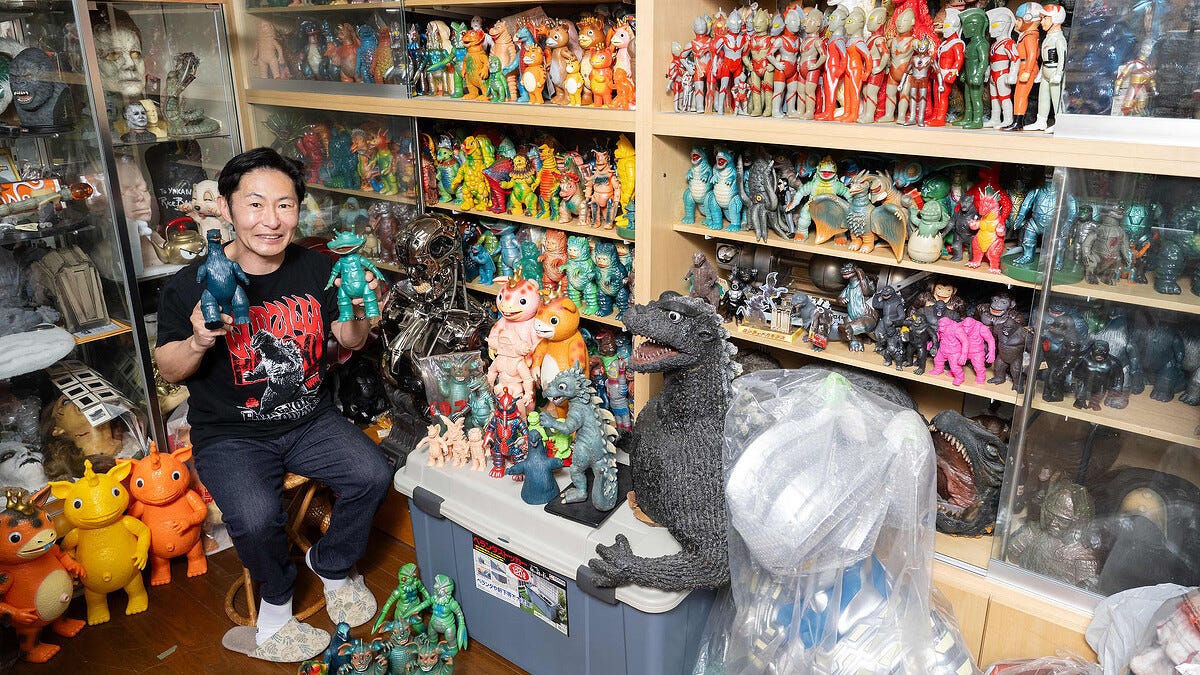
Inside Nabe Yakan’s Collection Room
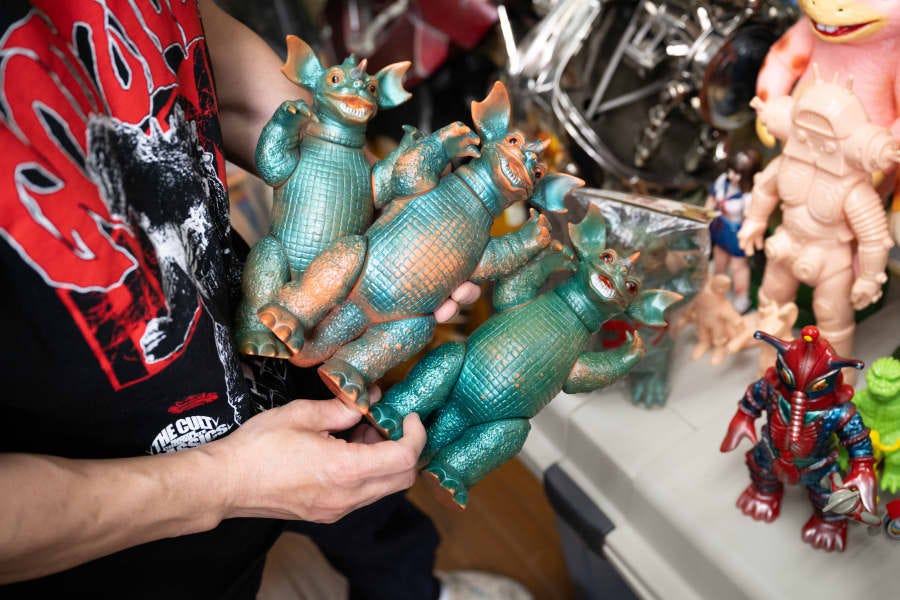
FRIDAY magazine spoke with entertainer Nabe Yakan, known as one of the world’s top kaiju toy collectors. His shelves are packed with vintage Ultra monsters, Godzilla kaiju, and figures from makers including Marusan, Bullmark, Bandai, Popy, and M1-Go. Looking at pieces from his own collection, Yakan said, “This Godzilla is probably around ¥1 million. Mechagodzilla is also ¥1 million, and Kanegon is probably about ¥500,000.” That is roughly $6,300 each for Godzilla and Mechagodzilla, and about $3,100 for Kanegon.
What Changed the Market?
Yakan said the market had once seemed like it might cool down as older collectors began passing away or selling off their collections. Instead, COVID changed the direction of the hobby. “The pandemic changed everything,” Yakan said. He explained that people spent more time online and began discovering the visual appeal of soft vinyl toys through social media. “SNS, and Instagram in particular, made a lot of people aware of how photogenic soft vinyl figures can be,” Yakan said. He also pointed to the rise of indie makers creating new original figures inspired by the old Marusan and Bullmark style, adding, “That helped connect soft vinyl popularity to the idea of soft vinyl as art.”
Fakes Enter the Collector World
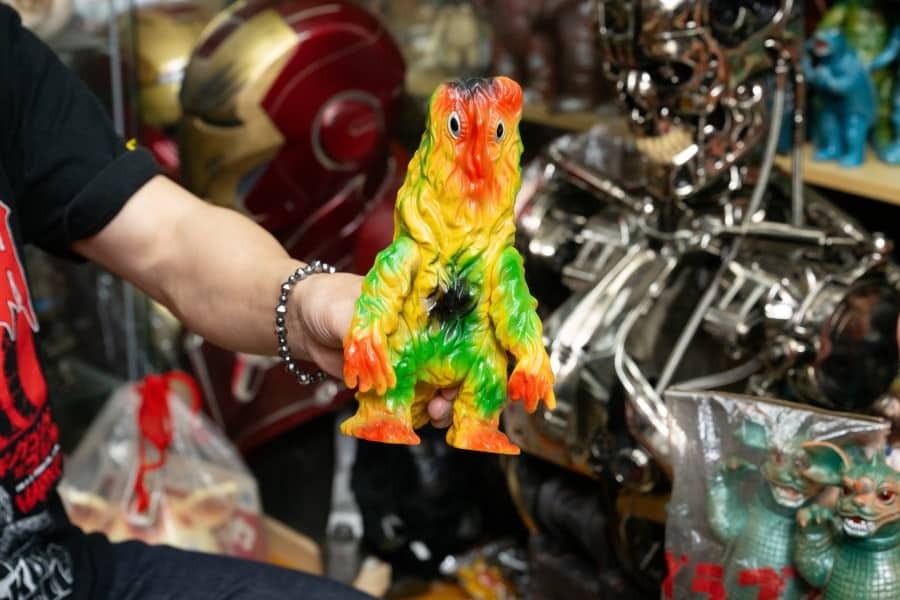
As prices rise, so does the risk. Yakan said some rare Bullmark-style figures that were once considered almost mythical suddenly began appearing in large numbers. “Most of them were fakes,” he said. According to Yakan, some counterfeits are made in Japan, while others are produced in China. Some are repainted and sold as “rare colors” or “unreleased sample colors.” Others are artificially scratched or aged, assembled from cleaner parts, or even marked with names in pen to imitate childhood wear. “Popular vintage toys outside monster soft vinyl figures, like Popy Chogokin and Jumbo Machinder items, are in the same kind of situation,” Yakan said.
Overseas Demand Pushes Prices Higher
The problem is becoming harder to spot because some older fakes are now showing real signs of age. “Pieces that have changed with age are starting to blend into the market,” Yakan said. He said online auctions and general recycle shops have made the situation worse because many sellers cannot properly authenticate what they are handling. “There are shops where several fakes are lined up,” Yakan said. “Sometimes they come with wording like, ‘We don’t know the details, but this came out of an old family storehouse.’” He also noted that overseas collectors have helped push prices even higher. “More overseas collectors have entered the market, and it feels like one extra zero has been added to the prices,” Yakan said. “It has become a world where even we can’t buy them anymore.”
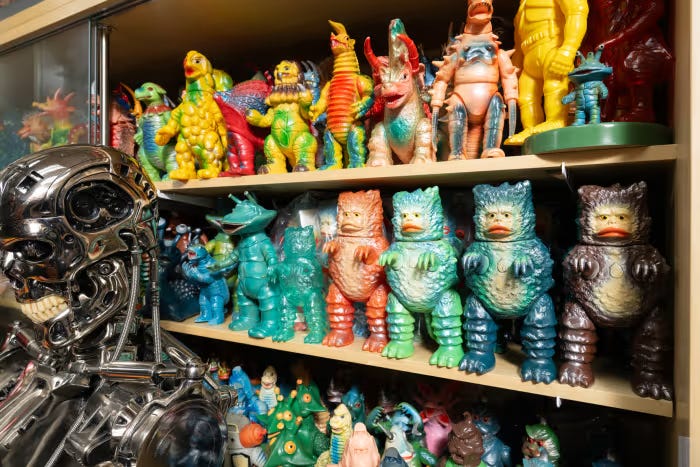
Even the famous “old toy smell” is not always reliable. Collectors often say vintage figures have a distinctive scent because of the materials used at the time, but Yakan warned that the smell can transfer when old and new toys are stored together. He worries that real expertise is fading. “In another ten years, there may be almost no one left who can really tell what is genuine,” Yakan said.
Collect the Toy, Not the Price Tag
Still, his advice to new collectors is not to chase prices. “It’s fine if the amazing prices get people interested,” Yakan said. “But instead of choosing based on whether something might rise in price, I hope people pick up reissues, current releases, or whatever they personally find cute, cool, or beautiful.”
Great article. Prices have gone nuts post-COVID, we've been discussing it here:
https://skullbrain.org/bb/index.php?threads/help-me-understand-the-rise-in-soft-vinyl-prices.56287/
I met Nabe Yakan in the US a while back, after talking for a bit we discovered we share a birthday.
He also wrote a book about kaiju sofubi a while back:
https://order.mandarake.co.jp/order/detailPage/item?itemCode=1072475117