


Pokémon, Detective Conan, Tamagotchi, and Pompompurin all mark major 30th anniversaries in 2026.
A new Mainichi Shimbun analysis looks back at 1996 as a turning point for Japan’s anime, game, and character industries.
The year helped shape the modern content economy through digital anime production, console wars, merchandising, and multi-generational fandom.
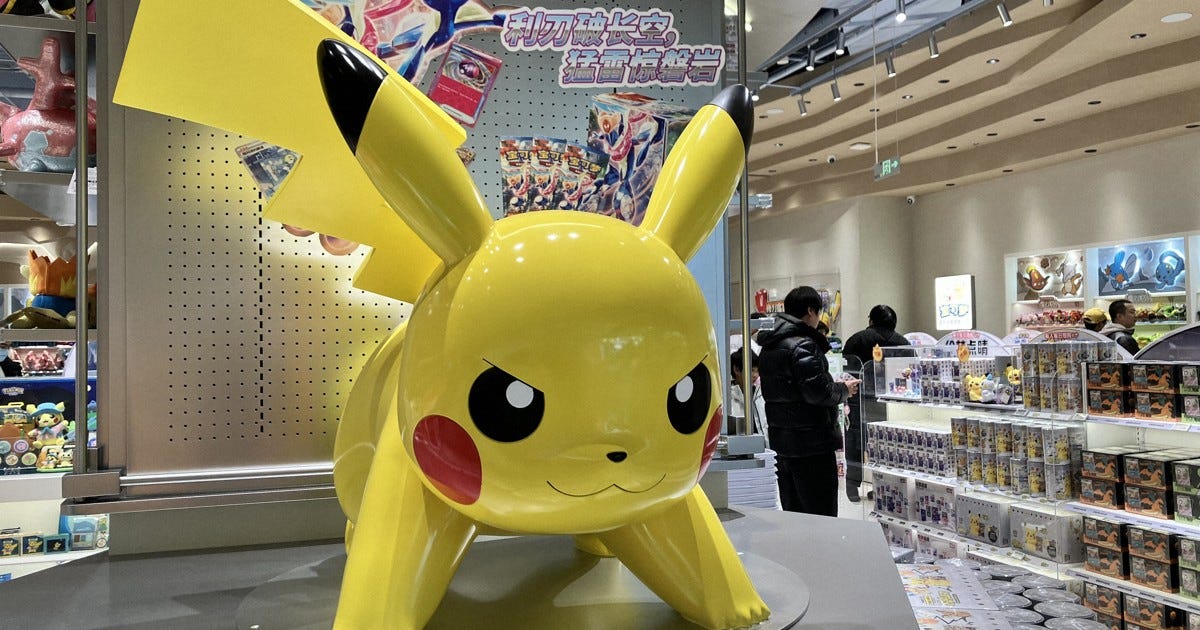
Pokémon was born as a game. Detective Conan began its long-running TV anime. Tamagotchi arrived as a tiny digital pet that took over schoolyards, toy stores, and eventually nostalgia culture. Pompompurin joined Sanrio’s lineup and became one of the company’s most reliable character hits….
Japanese pop culture in 1996 looked less like a normal year and more like a blast radius.
A new Mainichi Shimbun article by Tsutomu Kimino breaks down the year from five angles, arguing that 1996 was a “content Cambrian explosion” for Japan. The idea is simple: many of the basic forms that still define Japanese media today seemed to appear almost all at once.
The Digital Turn That Changed Anime Production

Japan in 1996 was coming off the shock of the previous year, when the Great Hanshin Earthquake and a historically strong yen had left a deep mark on the country. By 1996, the yen had weakened, manufacturers were investing again, and the economy briefly seemed to be moving beyond the long post-bubble slump.
Inside the anime industry, another major shift was underway.
That year, Toei Animation, then still known as Toei Doga, formally adopted RETAS!, short for Revolutionary Engineering Total Animation System. The software had already existed for several years, but its use by a major studio marked a new stage for the industry.
RETAS! made it possible to digitize large parts of the finishing process, including drawing, tracing, coloring, and photography. It did not immediately surpass the look and flexibility of analog production, but it dramatically changed the pipeline by removing chemical and optical processes from the workflow.
That had a human cost. Veteran specialists whose skills were built around the analog process were pushed out or forced to adapt. At the same time, younger creators with stronger interest in digital tools, CG, and computer-driven production entered the field.
Anime was beginning to look less like a purely craft-based business and more like an IT-driven content industry.
The Console Wars Created a Content Boom
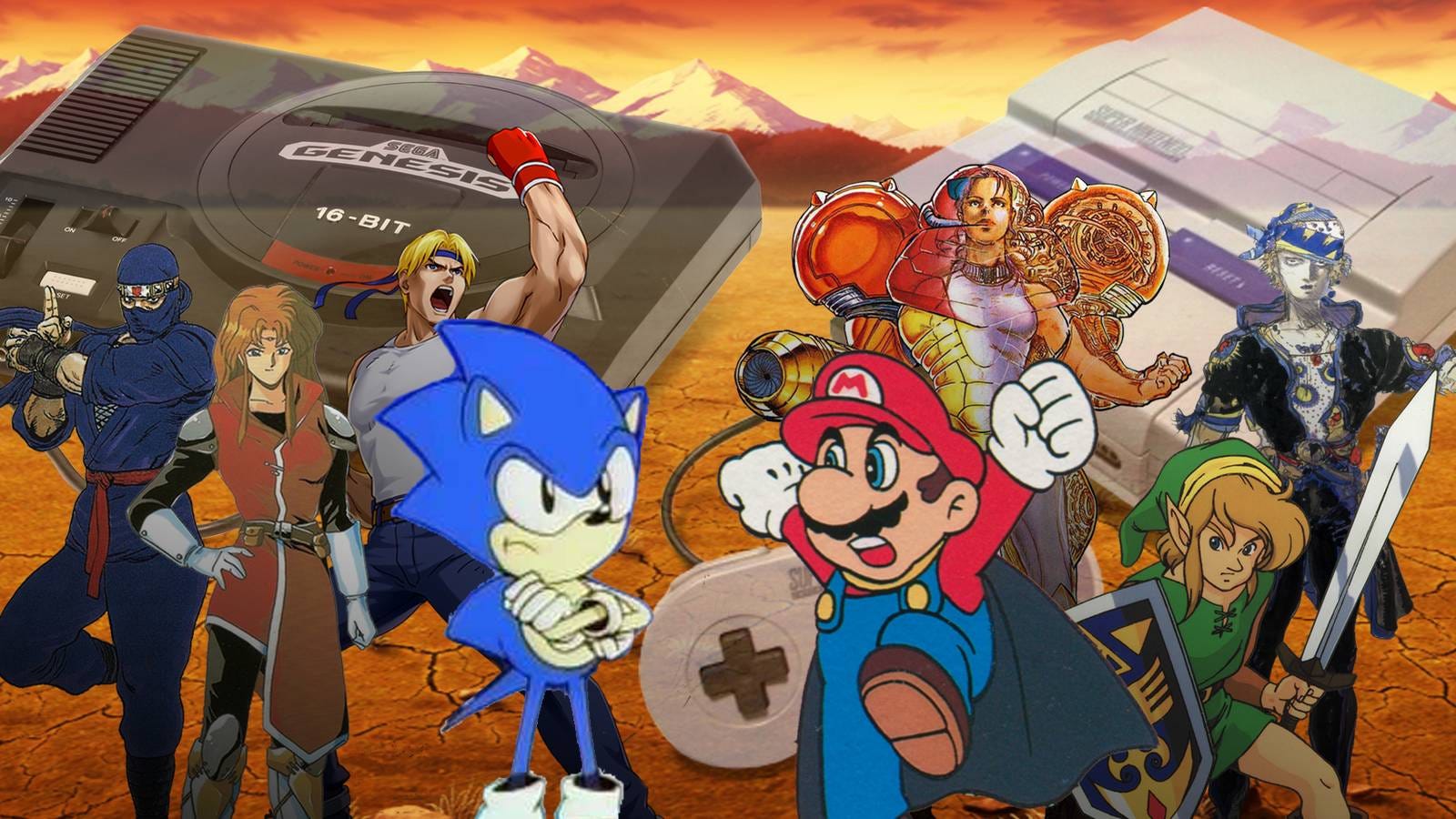
1996 also saw Japan’s “next-generation console war” enter a fever pitch.
The Sega Saturn, PlayStation, and Super Famicom were all fighting for space in the market, and that platform battle created ideal conditions for new hits. Games like Resident Evil and Sakura Wars emerged during this period, helping build franchises that would continue far beyond their original hardware. In this sense, the fight for game console dominance became a kind of greenhouse for content.
Pokémon, Tamagotchi, Detective Conan, and Pompompurin were not all born from the same business model, but they all appeared in an environment where characters, games, anime, toys, and merchandise were beginning to move together more aggressively.
Detective Conan had started as a manga in 1994 before TMS Entertainment, then Tokyo Movie Shinsha, brought it to TV in 1996. Pokémon followed a similar fast track, with OLM producing the anime adaptation in 1997, only a year after the original games arrived.
Both studios were also looking toward digital production around this period, showing how technology and character business were beginning to evolve side by side.
From Master Craftsmen to Repeatable Production
One of the major changes Kimino points to is the shift away from an older production culture built around “takumi,” or master craftsmen.
In earlier decades, Japanese animation and manufacturing placed enormous value on veteran skill. Experienced creators used instinct, technique, and accumulated knowledge to meet deadlines while still adding personal style and dramatic flair. Even when animation quality was inconsistent, strong scripts, characters, direction, and personality could still carry a show.
But as production schedules tightened and digital systems spread, the industry moved toward processes that were easier to repeat, manage, and scale. New creators, freed from the older craft system and supported by digital tools, increasingly focused on reproducing the look and appeal of original manga, games, and products. That helped strengthen character merchandising.
In modern merchandising-driven works, the goal is often less about letting characters grow dramatically and more about keeping them consistent, recognizable, and endlessly usable. For weekly TV series in particular, the priority is stable production: keep the same energy, the same tone, the same appeal, and never let the audience drift away.
That consistency is great for business. But for viewers raised on older analog anime, it can also leave them missing the raw personality and passion of individual creators.
Dot Graphics Became Imagination Engines
Pokémon and Tamagotchi were both shaped by the limits of handheld game hardware. At the time, small LCD screens could only show simple dot graphics. Those graphics were stiff, tiny, and limited. But that limitation became a strength. Players were invited to imagine the rest.
The roughness of the images made the characters feel collectible and expandable. Package art, guidebooks, magazines, merchandise, and promotional illustrations helped fill in what the screens could not show. Before long, the characters escaped the games themselves. That is one reason Pokémon could move to anime so quickly after its debut.
Tamagotchi did something similar in a different way. It was not just a digital pet device. It became a character goods business, expanding into stationery, candy, cards, and accessories. Decades later, it continues to return to trend status, helping feed the current “Heisei” nostalgia boom.
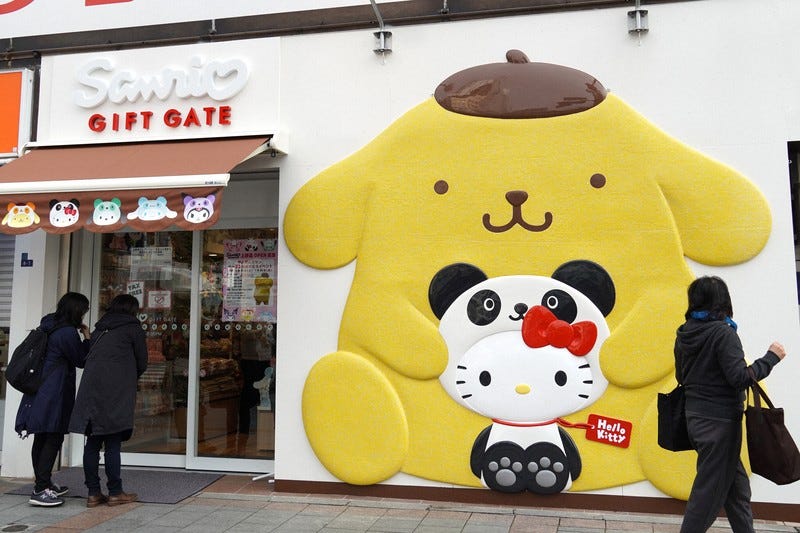
Pompompurin, who also debuted in 1996, became one of Sanrio’s most dependable characters, ranking near the top tier of the company’s popularity lineup for years.
Cute Media Started Showing Dangerous Things

Another reason 1996 stands out is that many of its biggest hits included things that earlier children’s or character media tended to avoid.
Tamagotchi had death. Pompompurin had his now-famous butt mark. Pokémon and Tamagotchi made the idea of carrying life around in your pocket feel normal. Detective Conan placed a child detective at murder scenes every week.
Even Resident Evil found a clever way around the discomfort of shooting human targets by making its enemies former humans rather than simply humans. Sakura Wars, meanwhile, combined romance adventure, simulation RPG elements, action, stage musical energy, and Taisho-era retro-futurism into a strange hybrid that had little precedent in the mainstream.
These were not all the same kind of taboo, but they shared a common feature. They took ideas that had been hidden, awkward, niche, or hard to say out loud and pushed them into the sunlight.
After 1996, the strange could become standard.
The Franchises Became a Shared Language Across Generations

The staying power of these properties may be the biggest proof of 1996’s importance.
Kimino recalls working on the Pokémon movie business and seeing an older company executive hold a Nintendo DS toward the screen during a preview event. The executive was receiving a special Mythical Pokémon distributed wirelessly at theaters and said he planned to show it off to his grandchild before trading it. That was in 2010. By then, Pokémon was already a three-generation product.
Detective Conan has done something similar. Its movie audience now crosses age groups, and each new entry is expected to push the series’ box office record higher. The latest film, Detective Conan: The Fallen Angel of Highway, has passed about $81 million (¥13 billion).
Tamagotchi, now in the middle of another boom, has also evolved into a parent-child item through communication features, gift exchanges, character matchmaking, and marriage systems.
Resident Evil booths at Tokyo Game Show now draw families. Sakura Wars lost its main Sega Saturn platform long ago, but the franchise continues to generate new fan interest through events, revivals, and spin-off effects.
A Gift From the Past and an Asset for the Future

The “content explosion” of 1996 was not just a nostalgia moment. It created the basic skeleton of much of Japan’s current content world.
For adults buying back the things they loved as children, 1996 is a gift from the past. For Gen Z fans discovering retro Heisei cuteness, it is a source of style and identity. For companies, it is an asset that can still be revived, remade, extended, and exported.
Economically, 1996 was not a golden age. Japan was still in a fragile recovery period, just before the 1997 consumption tax hike and Asian financial crisis.
But culturally, 1996 now looks like a prelude to the modern boom: mass anime exports, global streaming, character merchandising, theatrical anime records, and the worldwide rise of Japanese pop culture.
For Japan, a country that has repeatedly drawn strength from its content industries, 1996 was more than a good year for games, anime, and toys. It was the year the future showed up in character form.