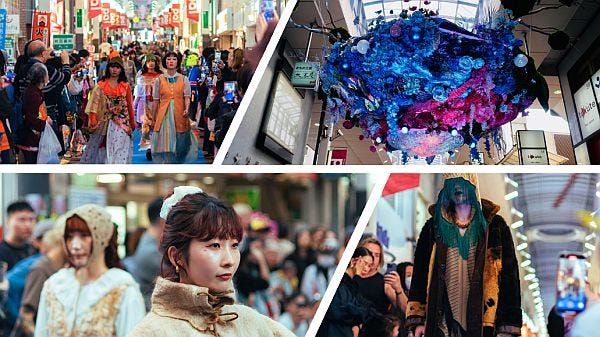

Koenji’s number of vintage shops is still growing in 2026, even as the used clothing boom has started to cool in other parts of Tokyo.
Local retailers say the neighborhood is evolving into a larger fashion destination, with vintage, designer labels, music, and street culture all mixing together.
Koenji Pal Shopping Street is leaning into that momentum with a fashion show and a self-styled “Fashion Special Zone” identity.
Koenji’s reputation as one of Tokyo’s top vintage neighborhoods is increasing. According to local shop owners, the area’s number of used clothing stores has continued to grow through 2026, giving the district fresh momentum at a time when similar excitement elsewhere, namely Shimokitazawa, has started to level off.
That growth is helping shape a bigger vision for the neighborhood. Some local retailers now see Koenji as one of the next places likely to define Tokyo fashion culture. And in Koenji, that fashion identity is not limited to vintage alone. Shops are also mixing in avant-garde labels, overseas appeal, and a broader sense of street-level creativity.
Koenji Wants to Be More Than Just a Vintage Shopping Area
For some store owners, the goal is not simply to keep adding more used clothing shops. They want Koenji to develop into a more artistic district where long-established businesses and newer arrivals support each other, and where fashion connects naturally with music, comedy, and other subcultures already embedded in the area.
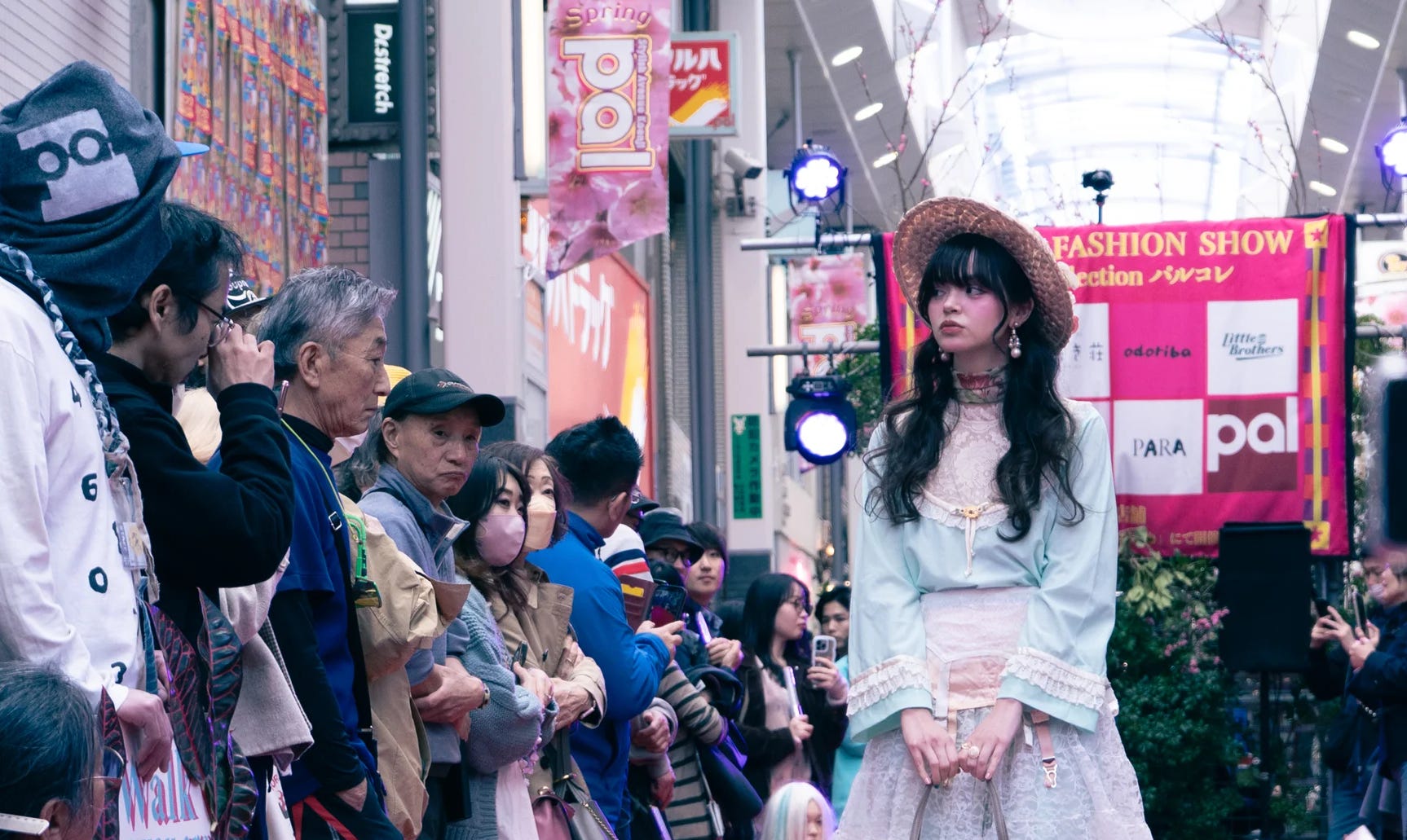
That same idea is showing up in public events. Koenji Pal Shopping Street, the arcade running south from JR Koenji Station toward Ome-kaido, recently held Spring Pal Festival 2026 and included a fashion show built around participating neighborhood stores. Organizers are using fashion as part of a larger effort to energize the local shopping street at a time when many such districts across Japan are under pressure.
A Local Runway Show Helps Push Koenji’s Fashion Identity Forward
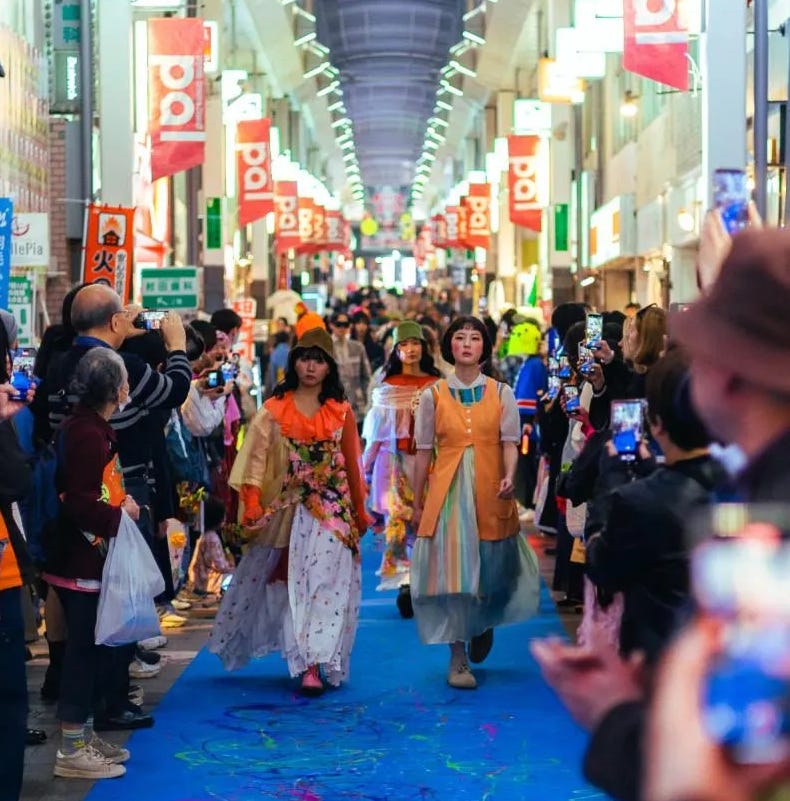
The shopping street association has now staged the runway event for the second year in a row. Framing Koenji as a “Fashion Special Zone,” organizers used this year’s concept, “Walk as You Are,” to promote the neighborhood as a place where individuality can stand out and where people can express themselves freely.
Seven stores joined the show: LittleBrothers, Little Trip to Heaven, PARA, Daikokuya, Higan, Furugiya Odoriba, and Matakiso. Each brought its own aesthetic, creating a more personal and neighborhood-driven presentation than a standard fashion runway.
Shop Owners Say Koenji Still Feels Open, Relaxed, and Full Of Style
That sense of individuality is part of what local retailers say makes Koenji special. Yuka Ishida of Little Trip to Heaven called it “a neighborhood with lots of people who wear the clothes they like, the way they like.” She also said that in Koenji, “there are lots of people who don’t hold back their desire to wear cute clothes and are willing to try flashy items.” Her shop, which also operates in Shimokitazawa and Kyoto, specializes in vintage clothing and original women’s items with a European flea market feel.
The owners of Higan, opened in Koenji in 2022 by Riichi Miyamoto and Ryunosuke Osaki, described the neighborhood in similarly direct terms. They said Koenji as a whole feels “laid-back in a good way,” giving them a comfort level that feels almost like being back in their hometowns. They also pointed to how music, comedy, and other forms of culture are deeply rooted there, and to the way many different kinds of fashion naturally coexist on the streets, from young people dressed in cutting-edge trends to older residents with an effortlessly stylish look.
Looking further ahead, Miyamoto said, “I want Koenji to develop even more as a fashion town.” He and Osaki envision not just more vintage shops, but a more artistic neighborhood where older stores and newer ones work together and where fashion, music, and other cultures come together. They also said they want the fashion show, over the next decade or so, to grow into something large enough to stand alongside Koenji’s Awa Odori festival.