


International tourists are increasingly visiting Japanese hair salons as part of their travel plans.
Competitive pricing, technical expertise, and hospitality make Japan’s salons appealing to global clients.
Stylist Teppei, whose clients are about 90 percent foreign visitors, says social media has accelerated the trend.
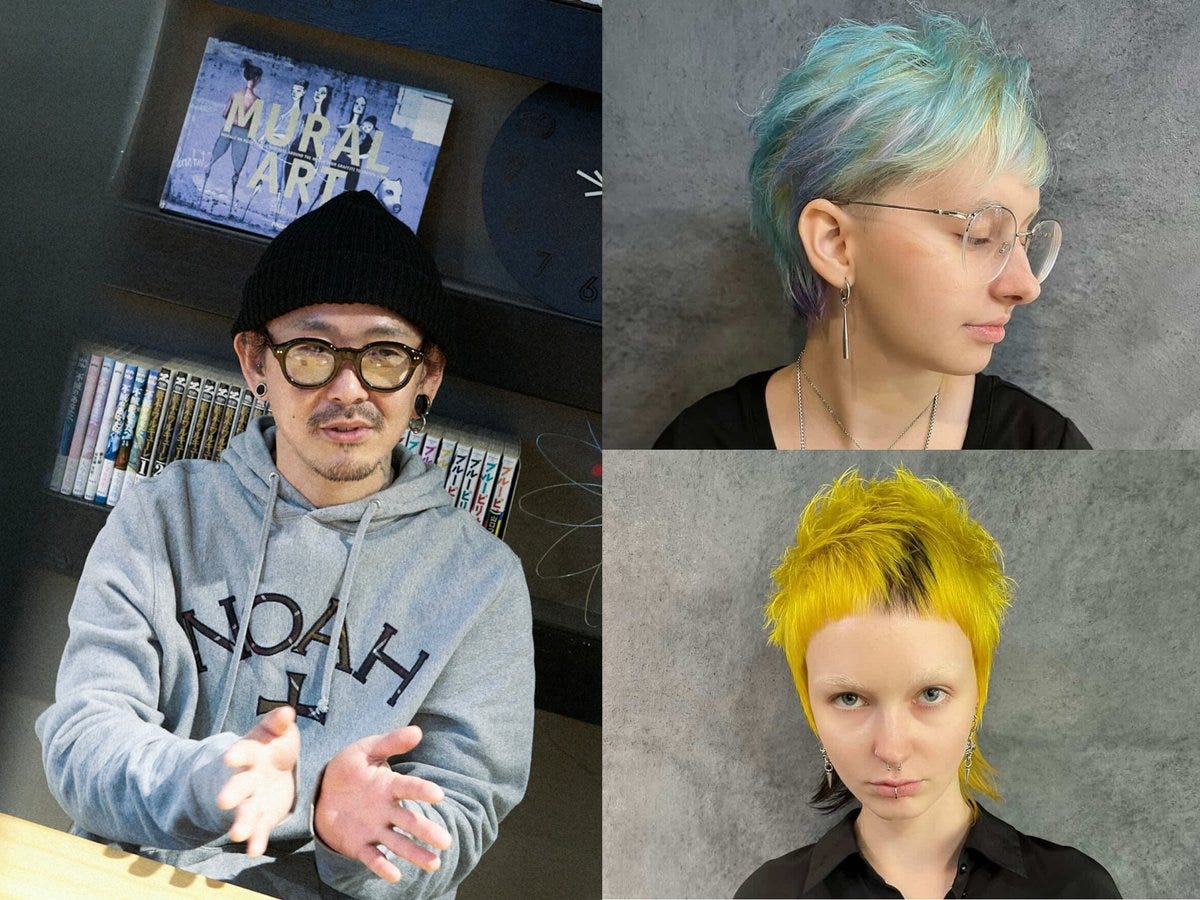
In recent years, social media has filled with videos showing international travelers visiting Japanese hair salons to enjoy haircuts, coloring treatments, and styling during their trips. The trend has grown to the point where simply saying “I went to a salon in Japan” is becoming a kind of lifestyle brand experience. Visiting artists and celebrities also increasingly stop by Japanese salons while traveling, returning home with freshly styled hair. Experts say the appeal goes beyond technical skill. Japanese cultural values, attention to detail, and the spirit of omotenashi hospitality all contribute to the attraction.
One stylist who has experienced the trend firsthand is Tokyo-based freelance hairdresser Teppei, who previously styled the hair of Olympic figure skating champion Alysa Liu, known for her iconic “Halo Hair” look at th e Milan-Cortina Winter Olympics. According to Teppei, about 90 percent of his clients are international visitors, many of whom book appointments months in advance through social media.
From London Training to Harajuku’s Global Clientele
Teppei began his career managing a salon in Osaka before traveling to London to study for three years at the Vidal Sassoon Academy. After returning to Japan in 2024, he launched a freelance practice in Tokyo’s Harajuku district. Recognizing that relatively few stylists in Japan could comfortably communicate in English, he chose to focus on serving international visitors. Today his clientele is dominated by overseas customers visiting Japan, and he also teaches seminars for hairstylists interested in attracting foreign clients. Drawing from conversations with customers, feedback on social media, and discussions with fellow stylists, Teppei has identified the main reasons international visitors are drawn to Japanese salons.
Price and Quality Drive Global Appeal

According to Teppei, the two biggest factors are price and quality. Japanese hairstylists are widely respected around the world for their technical training, and Japanese salons have operated in major cities such as New York, London, and Paris for years. These businesses have built loyal followings, but the cost of services abroad can be extremely high. “For example, if you get a cut and balayage at a Japanese salon in New York, the total including tips can be around ¥100,000 to ¥150,000, which is roughly $670 to $1,000,” Teppei said. “Even famous non-Japanese salons charge similar prices. In Japan, you can receive the same or even higher level of quality for under ¥50,000, about $335. For someone living in New York, that feels less than half the price.” The weak yen has also helped fuel the trend. For many travelers, salon services in Japan feel affordable even when travel costs are considered. Teppei says he regularly receives direct messages from prospective customers months in advance asking to reserve appointments during their trips.
Clean Spaces and Careful Service Create an Experience
The quality international visitors notice extends beyond hairstyling technique. Teppei says many foreign customers are surprised by the salon environment itself. Japanese salons typically offer spotless interiors, attentive service, thorough consultations, and relaxing head massages during shampooing. While these elements are standard in Japan, they are not always common overseas. As a result, visiting a Japanese salon becomes more than just a haircut. For many tourists it becomes a full experience where technical skill and hospitality are combined. The entire process, from consultation to styling, is treated as part of the value customers receive.
Social Media Amplifies the Trend
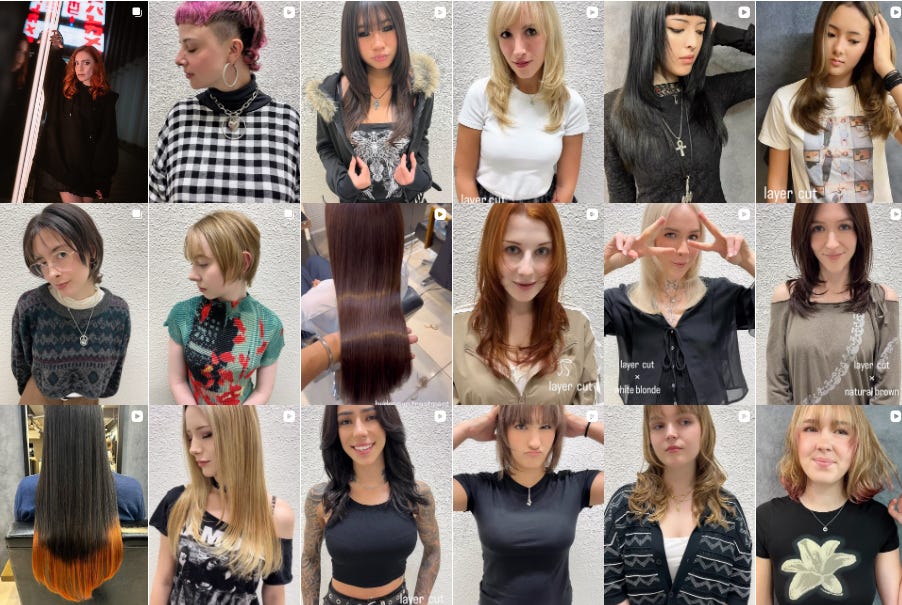
Social media platforms such as TikTok and Instagram have amplified this appeal. Videos documenting the entire salon process often attract large audiences, showing consultations, coloring techniques, and final styling results. These clips frequently highlight not only dramatic before-and-after transformations but also the stylist’s careful movements, the cleanliness of the salon, and the relaxing atmosphere of treatments. Many viewers are drawn to the almost ASMR-like quality of these videos. Over time they accumulate online as trusted firsthand experiences, encouraging more travelers to add salon visits to their Japan itineraries.
Japan’s Streets Act as a Real-World Showcase
Teppei also believes Japan’s everyday street culture helps drive interest. Tourists often notice how well-groomed the hair and makeup of people around them appear while walking through cities such as Tokyo. These real-life examples function as a kind of living showcase. Seeing these styles firsthand can inspire visitors to try Japanese hairstyling themselves. As a result, Teppei receives both advance reservations and spontaneous walk-in customers. During one interview session, a tourist entered without an appointment requesting a haircut and styling. He also receives messages from followers overseas asking how to request similar hair colors in their own countries, showing that interest in Japanese hair techniques is spreading internationally.
Training Standards Strengthen Japan’s Reputation
Japan’s hairstyling education system also plays a role in the industry’s global reputation. To become a licensed stylist in Japan, candidates must attend an accredited beauty school for two years full-time or more than three years through distance learning and then pass a national certification exam. In many European countries there is no equivalent national licensing system, meaning individuals can work as hairstylists without formal certification. “Japanese stylists are genuinely skilled,” Teppei said. “They receive professional education and go through demanding apprenticeships before working with clients. Because of that foundation, international customers are often surprised by the results.” One example of this expertise is high-tone hair coloring. Achieving delicate shades ranging from vivid pink to soft pastel requires precise bleaching techniques and careful evaluation of hair condition. Even small differences in chemical formulas or application timing can dramatically affect the final result, making strong technical knowledge essential.
Communication and Cultural Understanding Matter
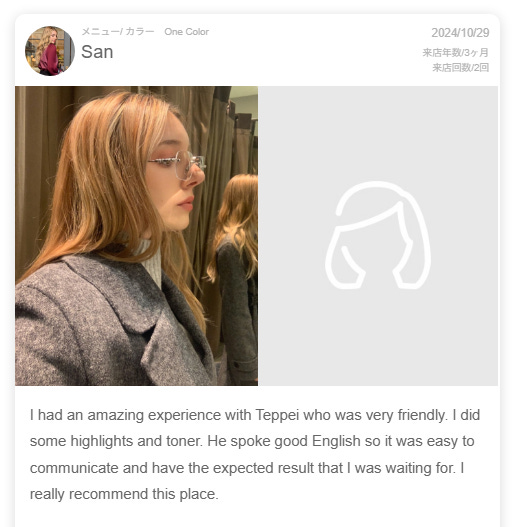
As international demand grows, salons still face one major challenge: the language barrier. Although more stylists in major cities are becoming comfortable serving foreign clients, Teppei believes nationwide adoption will take time. However, he says communication is about more than language ability alone. “Of course it helps to speak fluent English, but what matters more is the content of the conversation,” he explained. “Even for popular services like highlights or layered cuts, satisfaction depends on how clearly we can share the final image. Being able to understand nuances and offer suggestions creates trust.” Understanding cultural and lifestyle differences is equally important. Teppei notes that some clients from overseas may not even own hair dryers at home, meaning styling routines that Japanese stylists take for granted may not work in the same way for them. Adjusting recommendations to match each client’s circumstances helps build long-term relationships.
Japan’s Beauty Industry Looks Toward the World
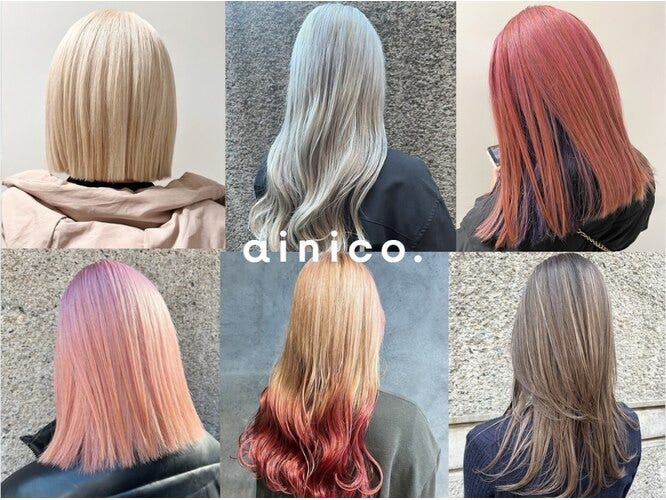
Beyond that, Teppei says it is important to consider who the message is intended for. “Different regions expect different things,” he explained. “Many visitors from Asia are interested in distinctly Japanese designs and trends, while customers from North America or Europe often explain what they want and then leave the final decisions to the professional.” He believes that if more stylists develop both strong technical skills and the ability to communicate ideas clearly, Japan’s beauty industry could further strengthen its presence on the global stage. Teppei remains optimistic about the future. “Japanese beauty still has tremendous potential worldwide,” he said. “Technical skill, customer service, and salon design can all be refined into a complete experience. If sharing what we have learned encourages more stylists to look outward and connect with international audiences, that would be a very positive development for the industry.”