


Sony officially ends Blu-ray recorder shipments in Japan, following REGZA’s earlier exit and sharply narrowing Japan’s domestic options
Streaming, catch-up TV, and changing viewing habits have hollowed out the recorder market in Japan, but not Blu-ray as a format
Physical media still matters for archiving, quality, and ownership in an era of unstable streaming catalogs
On February 9, 2026, Sony announced it has completed shipments of its Blu-ray Disc (BD) recorders. For longtime audio-visual fans, this was a day many expected would eventually arrive, but Sony’s withdrawal still carries symbolic weight. Sony helped define the Blu-ray standard, launched the world’s first consumer BD recorder in 2003, and spent two decades shaping the category. Its exit marks the end of an era.
Below is a look at what’s actually ending, what’s not, and why Blu-ray still has a future even as recorders disappear.
After REGZA, Sony Steps Away and Domestic Choices Shrink
Sony’s decision did not come out of nowhere. In September 2025, the company announced that its companion app Video & TV SideView would be discontinued in March 2027. Once the software ecosystem was set to end, hardware support was always likely to follow.
The timing also matters. Just one month earlier, TVS REGZA announced the end of production for REGZA Blu-ray recorders. REGZA, once beloved by recording enthusiasts, had already signaled how difficult the market had become.
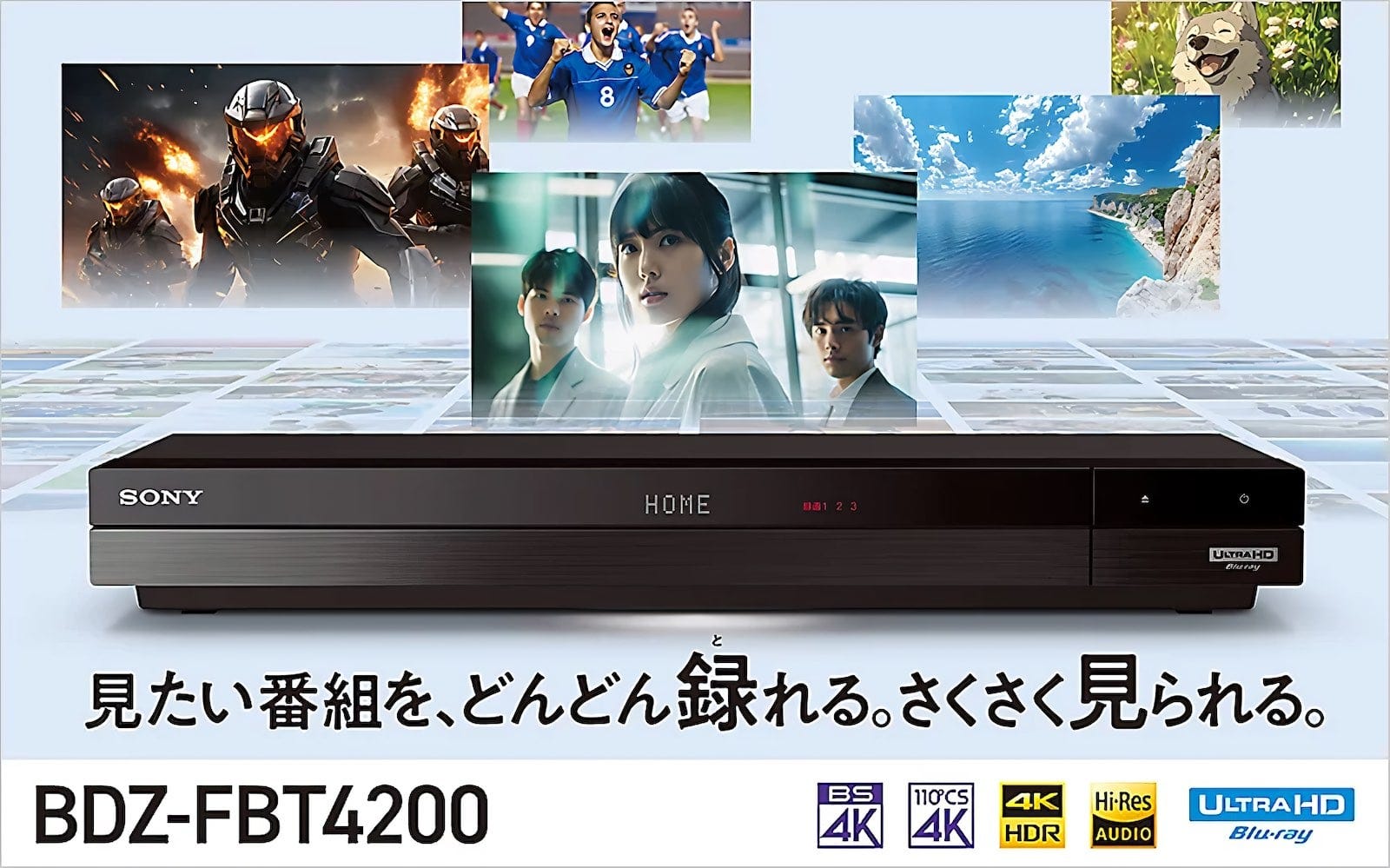
What remains is a thin field. Sharp still technically participates, but has not released newly designed in-house models in some time. In practical terms, the only company still actively developing and releasing new Blu-ray recorders in Japan is Panasonic, whose DIGA line continues to receive updates.
In other words, the recorder market in Japan has effectively become a one-brand category.
From Broadcast Recording to Streaming, a Shift No One Could Stop
The reasons behind this contraction are straightforward. First is the decline of scheduled broadcast viewing in Japan. Recorders once existed to free viewers from broadcast timetables. Today, that role has been overtaken by streaming and catch-up services.
Between YouTube, Netflix, and Amazon Prime Video, most Japanese households already have more content than they can realistically watch. Even traditional TV programs are increasingly covered by services like TVer and NHK Plus, reducing the need to capture broadcasts locally.
As a result, the old workflow of receiving a broadcast signal, recording to HDD, and burning to disc no longer fits how most consumers watch TV.
The Recorder Market Is Ending, Not Blu-ray Itself
It is important to separate two different things. The decline of Blu-ray recorders does not mean the end of Blu-ray as a format.
Manufacturers are exiting the business of making devices for recording TV broadcasts to disc. Commercial Blu-ray and UHD Blu-ray software for films and anime remains healthy, as do Blu-ray players and game consoles capable of playback.
Streaming offers convenience, but it is constrained by bitrate limits, bandwidth conditions, and licensing. Titles can vanish without notice due to rights issues or service changes. For movie fans and audio-visual enthusiasts, Blu-ray remains the most reliable way to own content in consistently high image and sound quality.
The Hidden Risk of TV-Attached External HDD Recording
As recorders fade, many Japanese households now rely on external USB hard drives connected directly to their TVs. While convenient, this approach carries a major risk.
Most external HDD recordings are paired to a specific television using copy-protection systems. If the TV is replaced or the HDD fails, recorded programs may become completely unplayable. Compatibility technologies like SeeQVault exist, but device support is inconsistent and confusing for consumers. This makes long-term archiving far less secure than many people realize.
Sony’s Exit Is Sad, but the Disc Still Matters
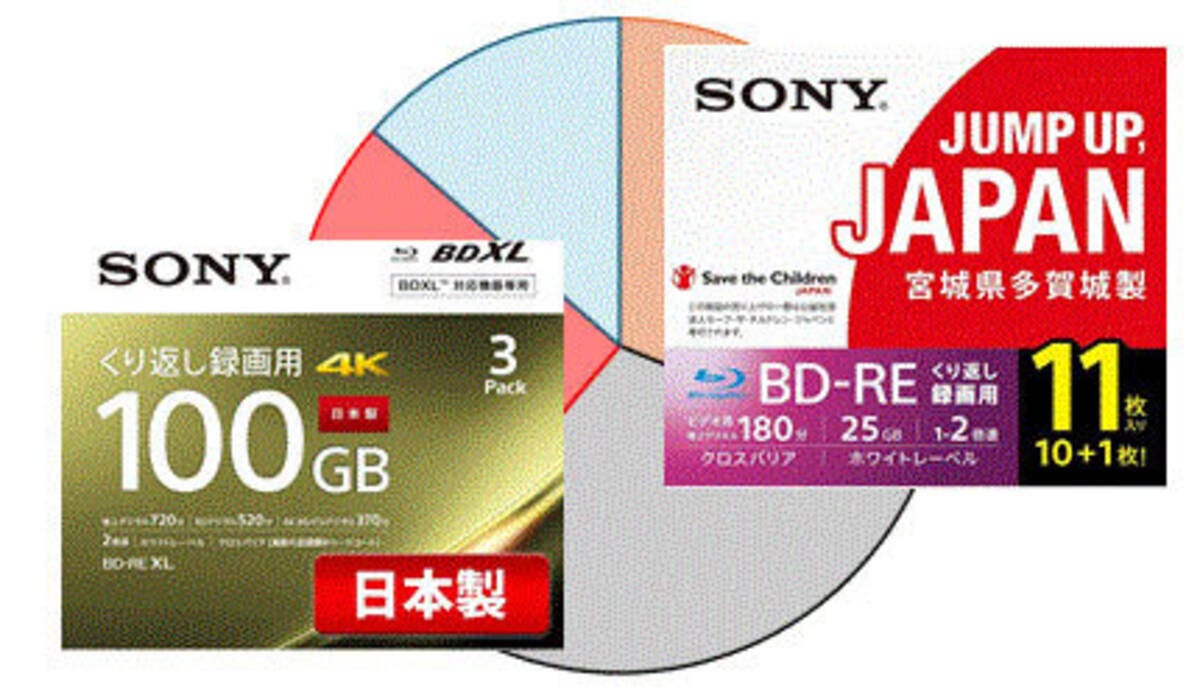
Sony’s withdrawal from Blu-ray recorders, following REGZA’s exit, is undeniably bittersweet. But it also serves as a timely reminder to review how and where valuable recordings are stored.
As TV hardware increasingly comes from brands like TCL, where long-term recording ecosystems are not a priority, the responsibility for preservation shifts to the user.
In a streaming-first era, the humble disc still offers something digital platforms cannot: permanence. Blu-ray may no longer be the center of everyday TV viewing, but as an archive format, it is very much alive.