


Japan’s early internet was once dismissed as a suspicious playground for researchers, otaku, outsiders, and questionable businesses.
Writer and journalist Toshinao Sasaki argues that the chaos surrounding today’s AI boom closely resembles the internet industry of the 1990s.
The history of 2channel, online subcultures, and Japan’s web companies may offer important lessons for the coming AI era.
Innovation Begins in Unlikely Places

When the internet began spreading through Japan in the 1990s, it was hardly viewed as the foundation of a new global economy. To much of the public, it was an obscure and vaguely suspicious technology used by university researchers, computer enthusiasts, and otaku. Some dismissed it as a temporary fad, while others associated it with questionable businesses, antisocial users, and corners of society that respectable companies preferred to avoid. Three decades later, the internet has become essential infrastructure, while many of the people once treated as outsiders helped create some of Japan’s largest digital companies. Writer and journalist Toshinao Sasaki believes that history offers an important way to understand the current state of artificial intelligence.
Sasaki explores the idea through Seven Upheavals: A 30-Year History of the Internet Industry Led by the Disreputable, a new book by Kentaro Kawabe, the former chairman and representative director of LINE Yahoo. Kawabe spent much of his career on the front lines of Japan’s web industry, and his account traces the excitement, confusion, failures, and sudden transformations that shaped the business over three decades. According to Sasaki, two of the book’s most important ideas are “shadiness” and “chaos,” qualities that conventional business thinking usually treats as problems but that may also provide the conditions necessary for genuine innovation.
“Kawabe argues that fundamental innovation does not emerge from neatly organized rules or model-student approaches,” Sasaki says. “The real energy capable of opening the next era is often found in things that were initially dismissed as disreputable.”
That description closely fits Japan’s early internet industry. The dot-com bubble of the late 1990s attracted an enormous number of unreliable companies, opportunists, and outright frauds, with some executives eventually facing arrest. At the same time, legitimate businesses survived that disorder and grew into major companies, including Rakuten, Yahoo Japan, CyberAgent, and Edge Corporation, which later became Livedoor.
The Creative Value of Chaos
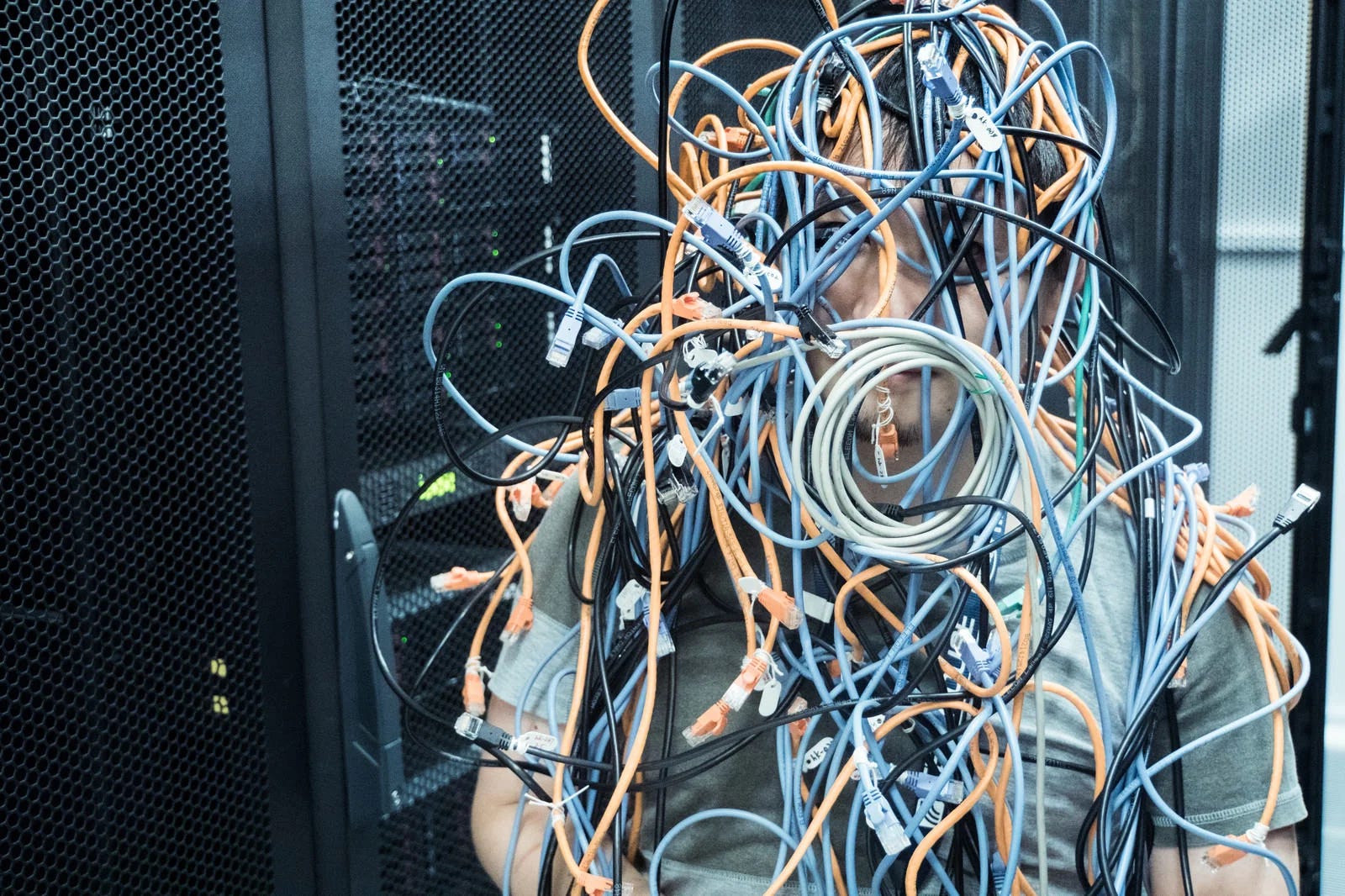
For Sasaki, this pattern is not unique to technology. Creative industries also depend on large, unruly ecosystems in which questionable work and serious talent often develop side by side. Japan’s publishing boom of the 1990s produced countless dubious magazines, but those publications also gave young writers opportunities to develop their skills and eventually become respected professionals. The film industry followed a similar path, with directors who began their careers working on Nikkatsu Roman Porno productions later becoming major filmmakers.
“There is always a vast and dirty foothill beneath the mountain,” Sasaki says. “I think the things that emerge from that landscape are the essence of culture. Every field needs a certain amount of shadiness. If something is not attractive enough to draw questionable people, it may not be attractive at all.”
The argument is not that fraud or exploitation should be celebrated, but that emerging industries are rarely born in clean, orderly environments. They attract experimentation, unusual personalities, risky businesses, and people operating outside established professional structures. Most of their ideas disappear, but some eventually become the foundation of new companies, art forms, and cultural movements.
From 2channel to Mainstream Culture
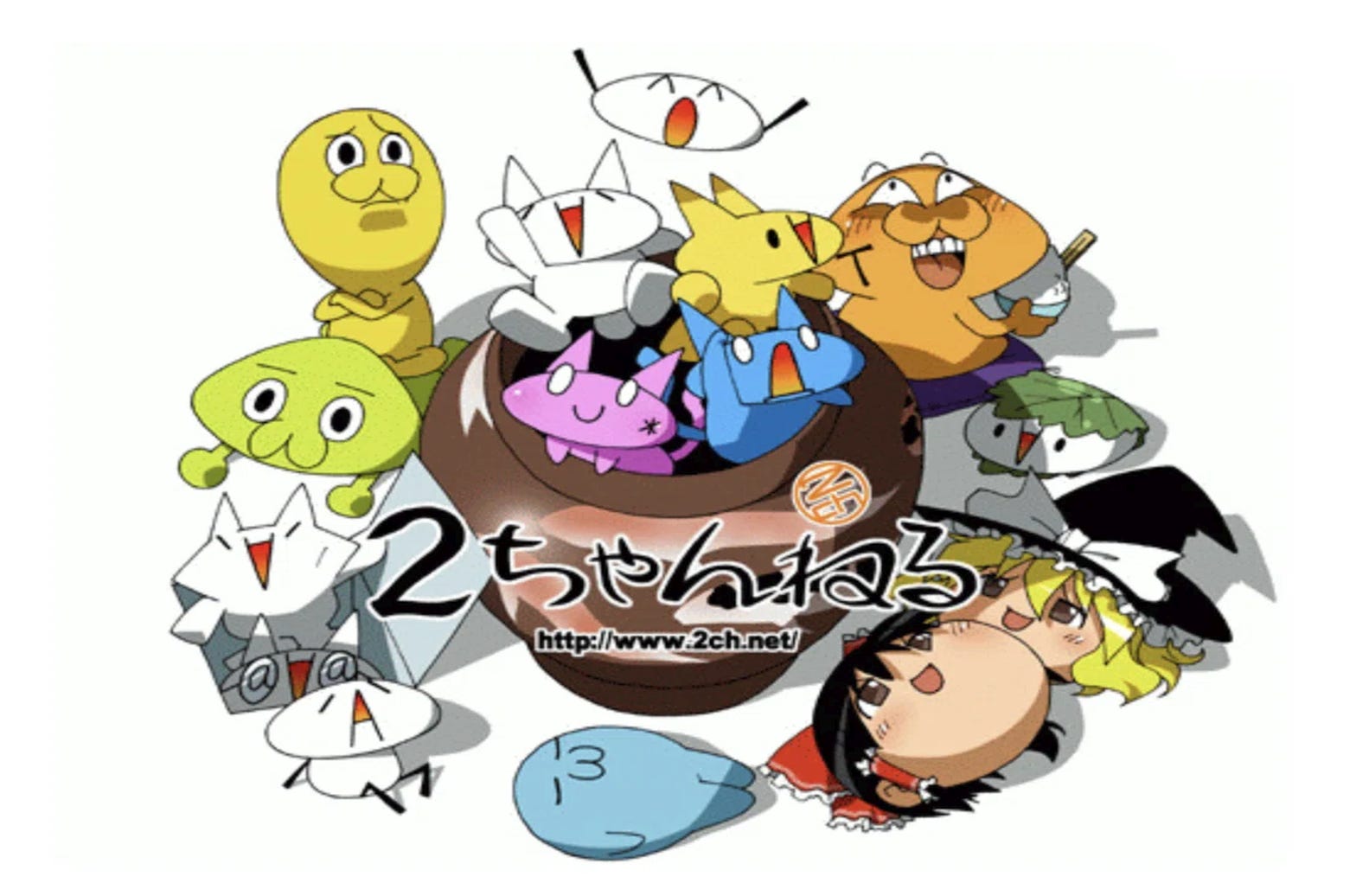
Japan’s early internet culture was defined by outsiders, particularly the communities that gathered around anonymous message boards such as 2channel. At the time, 2channel users were frequently stereotyped as poor, unemployed, socially withdrawn otaku. Later research complicated that image, suggesting that many users were technically skilled people working in scientific or engineering fields, often with comparatively high incomes. The culture that took shape online around the year 2000 was strongly influenced by people born in the 1970s, including 2channel founder Hiroyuki Nishimura, who helped establish the language, humor, and confrontational style of Japan’s early web.
That culture began changing dramatically during the 2010s as the internet became a mainstream part of everyday life. Anime and manga were no longer interests associated only with dedicated otaku, and ordinary young people increasingly entered online spaces that had once functioned as secluded playgrounds for computer enthusiasts. Around 2010, some veteran internet users jokingly referred to themselves as the “Mohican tribe,” borrowing imagery from The Last of the Mohicans. They felt that the arrival of socially active, fashionable, and conventionally successful users was driving the original online population away from its former refuge.
What had once been called otaku culture gradually became part of mainstream youth culture. Enjoying anime or manga no longer automatically marked someone as an outsider, and the boundary between specialist fandom and everyday entertainment began to disappear. The internet did not simply spread existing subcultures to a larger audience. It changed how those subcultures were perceived and allowed their interests, language, and aesthetics to enter ordinary life.
The Arrival of Older and Political Users

Older generations also entered the internet in growing numbers. The mass retirement of Japan’s baby boom generation beginning in 2007 was followed by major political and social events, including the 2011 earthquake and tsunami and the return of Shinzo Abe as prime minister in 2012. During that period, Twitter, now known as X, became increasingly political in Japan and elsewhere. Sasaki says his personal impression was that large numbers of politically engaged older men had joined the platform, adding another group to an already crowded digital environment.
“The internet today is filled with all kinds of people swirling together,” Sasaki says. “There are the descendants of otaku culture, the ordinary young people who entered as it became mainstream, older users, and politically focused communities. The clashes between those cultures are part of what makes it interesting, and they may also show how closely the internet and the physical world have come together in Japan.”
The modern Japanese internet consequently became a mixture of descendants of the original otaku culture, younger mainstream users, older people, political activists, and many other communities whose values frequently collide. What was once a specialized technology used by a limited group had expanded until it reflected society itself, including its divisions, contradictions, and changing cultural standards.
AI Is Following the Same Path
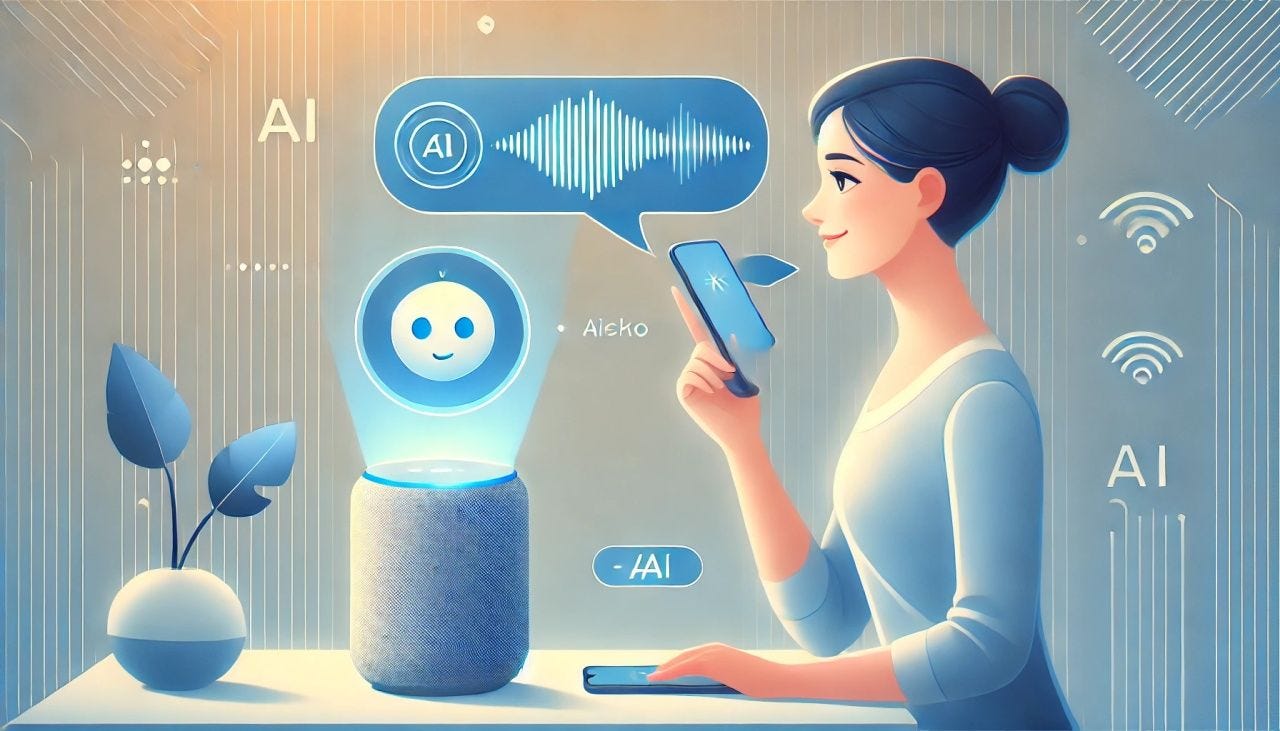
Sasaki expects artificial intelligence to follow a similar pattern. AI tools may currently appear intimidating, unreliable, or useful mainly to specialists, but their interfaces are likely to become dramatically easier to use. Personal computers once required manuals and technical knowledge, while smartphones can now be operated intuitively by people with little formal training. The next stage may involve dedicated AI devices that eliminate screens and keyboards altogether.
Technology companies are already exploring wearable devices, smart speakers, wireless earbuds, and other products designed around continuous interaction with AI. Instead of typing commands or navigating menus, users may increasingly operate computers through ordinary conversation. As voice systems improve, the assumption that older people are inherently unable to use new technology may also begin to disappear.
In that future, interacting with a computer may become less like operating a machine and more like speaking to another person. As access expands, the central question surrounding AI will shift away from technical operation and toward purpose. Businesses, creators, and individuals will need to decide where AI should be used, what it should produce, and whether it can create forms of value that did not previously exist.
Lessons for the Next Technological Wave

Few people watching the internet emerge around the year 2000 could have accurately predicted smartphones, social media, cloud computing, or the industries that would grow around them. AI is now at a similarly uncertain stage. Its next major applications may be impossible to imagine from the present, but Sasaki argues that new waves will inevitably arrive. Preparing for them requires studying how earlier technologies moved from chaotic subcultures into mainstream society, and how industries that initially appeared unreliable eventually became unavoidable.
The internet began as something strange, disorderly, and suspicious before becoming part of the infrastructure of daily life. AI may now be traveling along the same path. Japan struggled during the era of digital transformation, but increasingly intuitive technology could create another opportunity as computers become accessible through natural conversation.
The decisive issue will not simply be which country or company possesses the best technology. It will be whether people have the imagination and practical ability to determine how that technology should be used and what new value it can create. Rather than attempting to eliminate chaos entirely, the history of the internet suggests that the next generation of innovation may already be taking shape inside it.
"Shady" carries an accusation. 胡散臭い (usankusai) — the word a Japanese speaker reaches for here — doesn't.
It means: I have no way to verify what this is, so I'm standing back. Not "you're a criminal." Closer to "I don't have a category for you yet."
Which sharpens Sasaki's point. Japan didn't hold the early internet at a distance because it looked criminal. It held it there because no category existed. And once a category arrives, the 胡散臭さ evaporates — along with the room where the interesting things were happening.